
Last updated August 26, 2026
Free on-site gate assessment - hinges, posts, and your LiftMaster or Nice gate operator checked before anything is quoted
The assessment is free and the quote is the invoice.
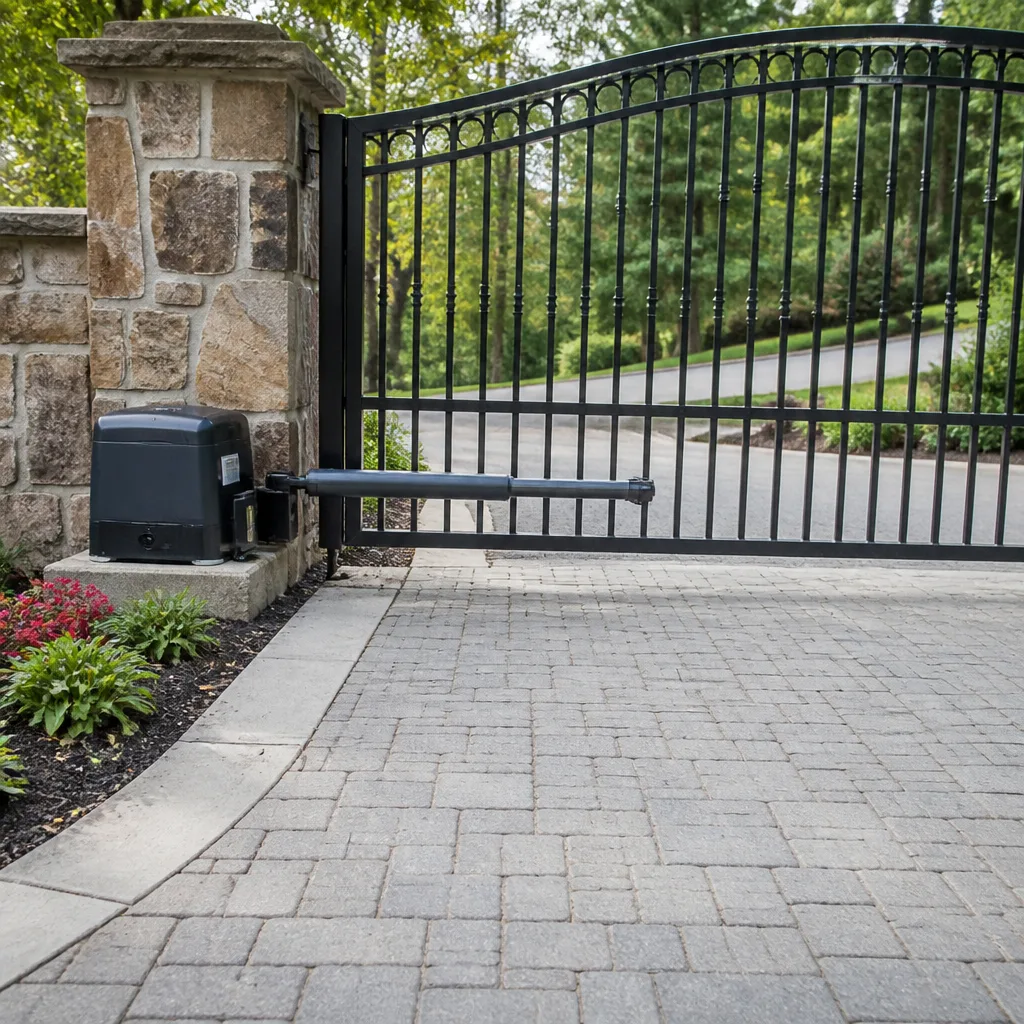
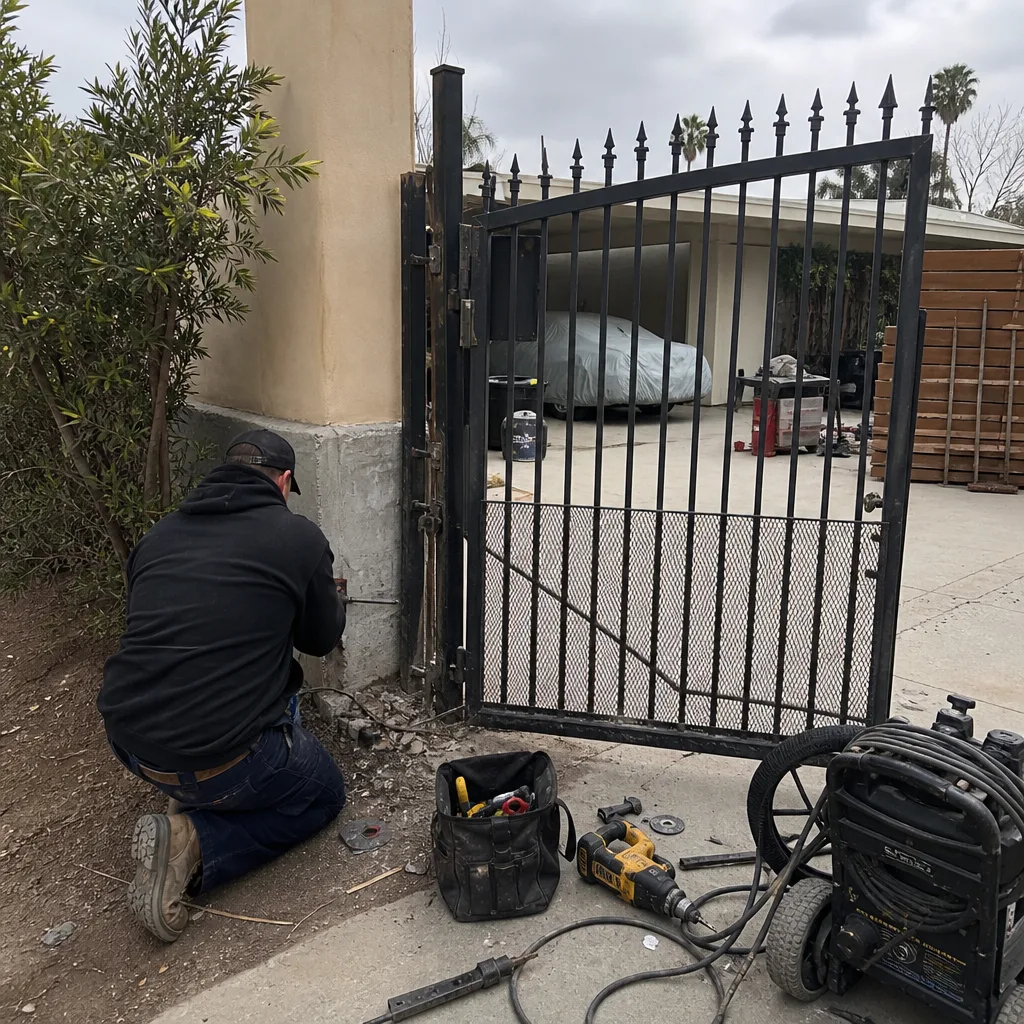 Before
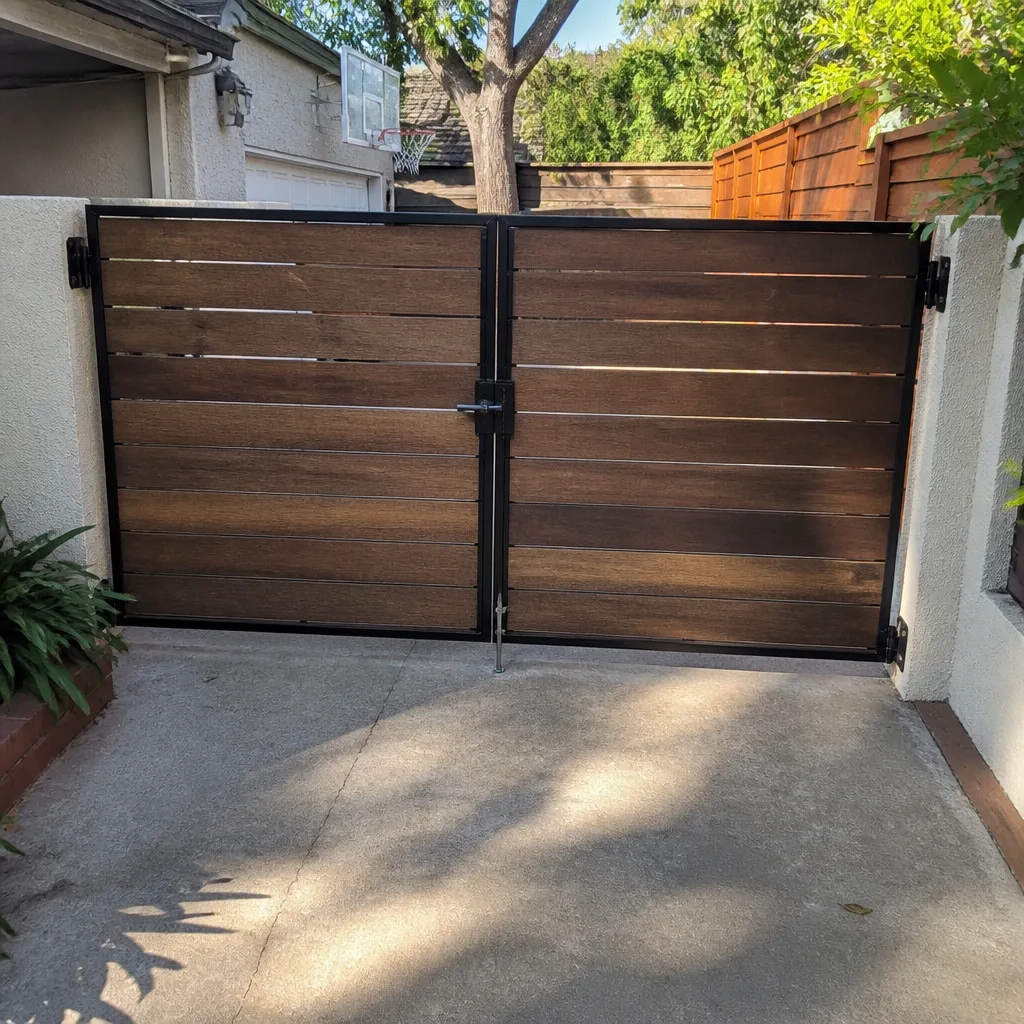 After
After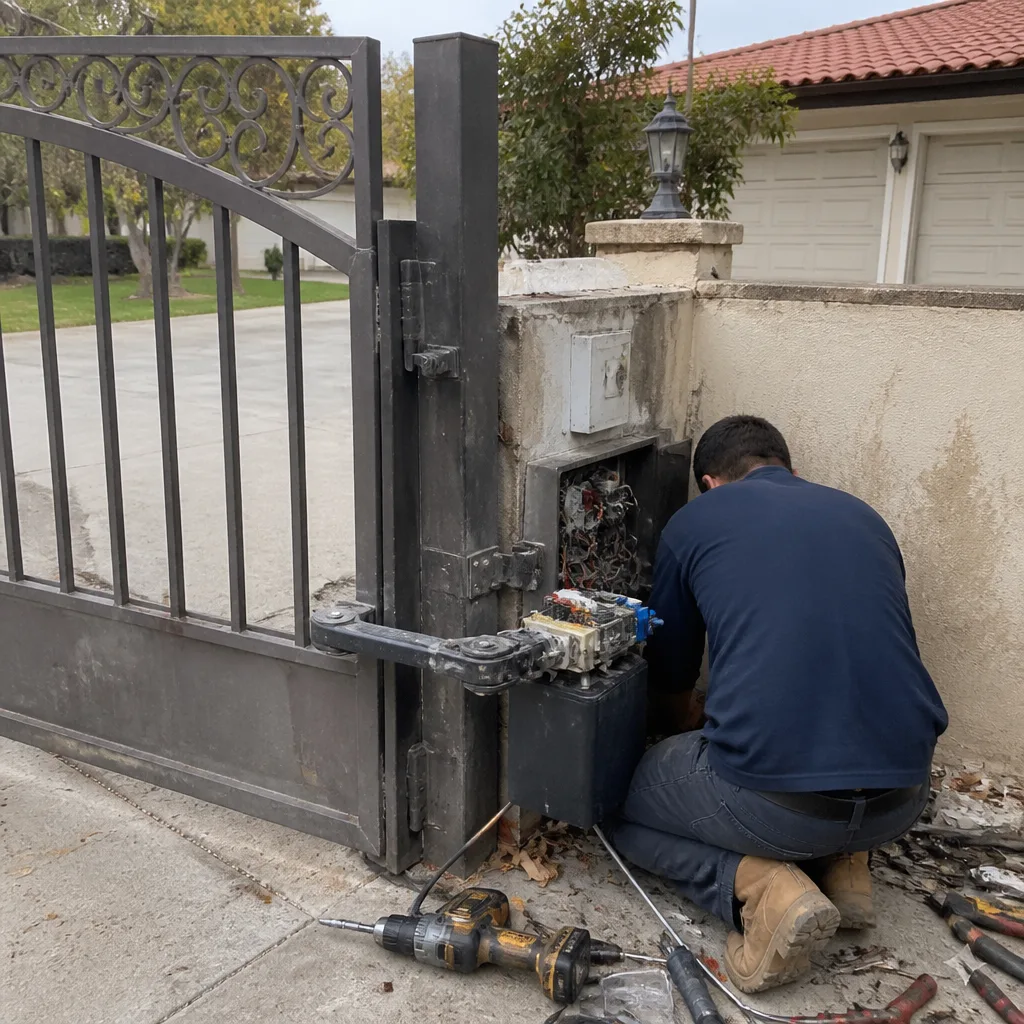 Before
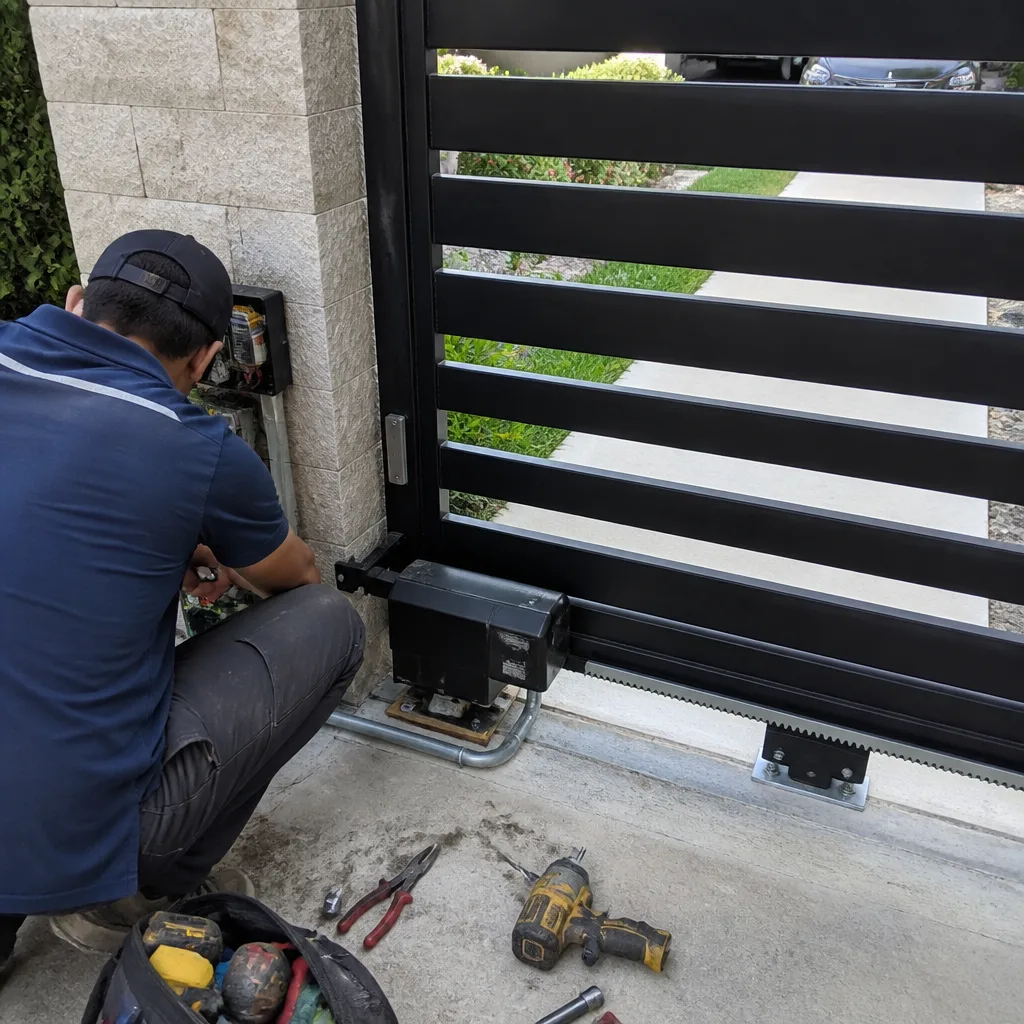 After
After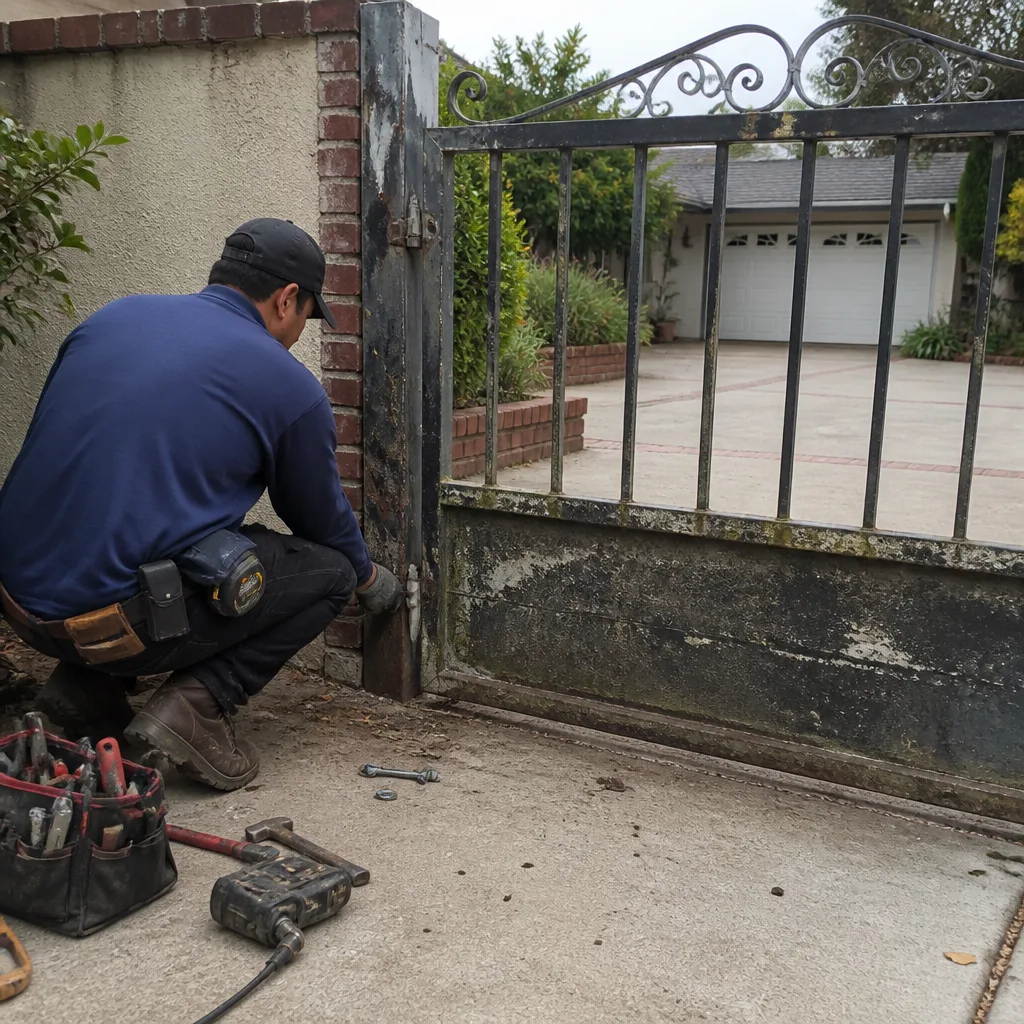 Before
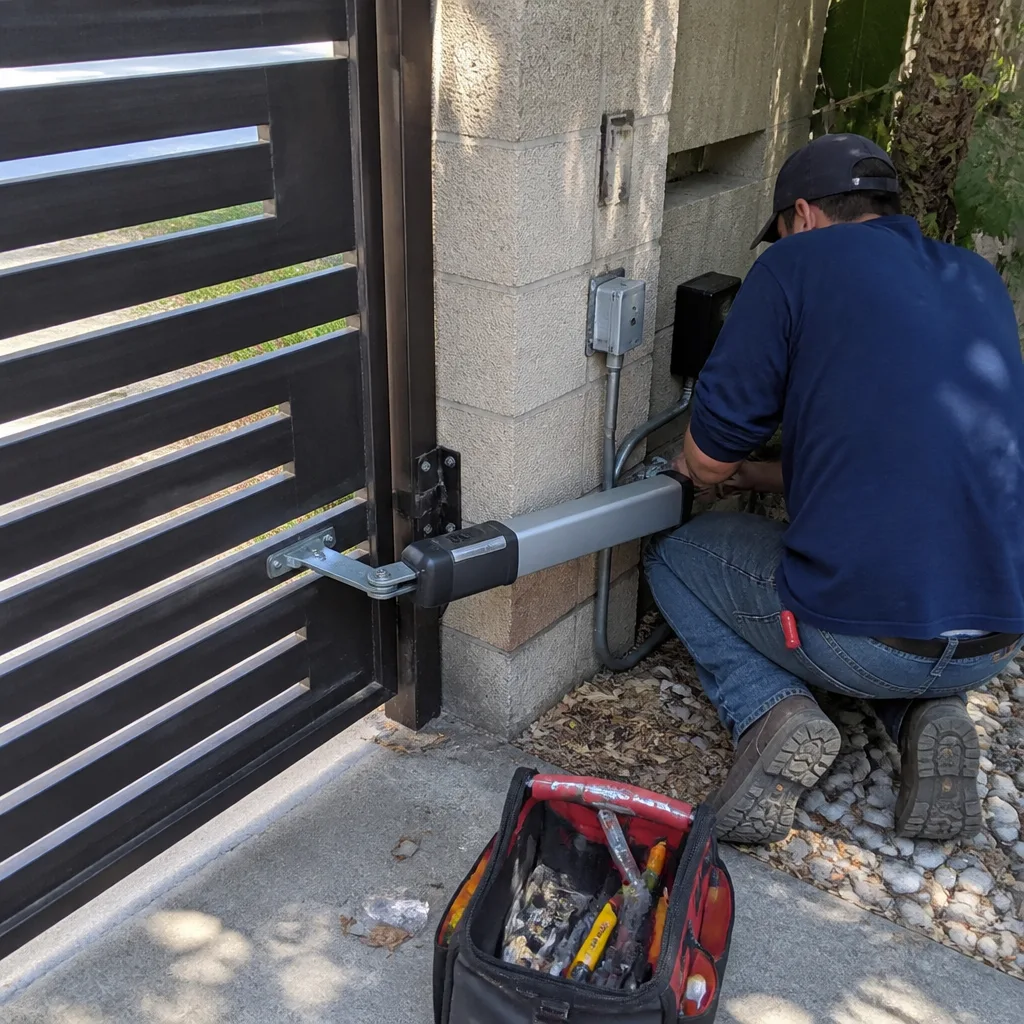 After
AfterGate Repair Warning Signs: A Tarzana Homeowner’s Reference Guide
There is a particular grinding noise that means you have about three weeks before a sliding gate roller fails completely. It sounds almost identical to the noise that means you just need to clean the track, and telling them apart is the whole ballgame. Most gate failures that look sudden actually announced themselves weeks or months earlier. Homeowners just didn’t know what they were hearing, seeing, or feeling. This Seasonal Gate Repair Care for Tarzana: Year-Round Homeowner’s Guide translates the symptoms a Tarzana gate produces into the underlying problems they signal, so you can stand in your driveway, listen, look, and know exactly what you’re dealing with and how much time you have.
Quick Answer
The most common Gate Repair warning signs in Tarzana are a grinding noise from the track or rollers, a gate that moves slower than it used to, visible rust at weld points or post bases, a gate that stops halfway and reverses, and gaps that change width along the gate’s travel path. A grinding noise that scrapes continuously usually means roller replacement is imminent, while a low rumble that goes away when the track is clean is maintenance, not a failure. Catching these signs early typically means a $150 to $400 repair instead of a $1,500 to $4,000 replacement. Call (818) 514-7606 for a free estimate if you’re seeing or hearing any of what follows.
Table of Contents
- Sound Diagnostics: What Your Gate Is Telling You
- Visual Warning Signs You Shouldn’t Ignore
- Speed and Resistance Changes in Electric Operators
- Ground and Pavement Clues Around Your Gate
- How Long You Have: Warning Signs Ranked by Urgency
- What Tarzana’s Climate and Soil Do to Gates
- Common Mistakes to Avoid
- When to Call a Professional
- Frequently Asked Questions
- The Bottom Line
Sound Diagnostics: What Your Gate Is Telling You
Every sound a gate makes corresponds to a specific component working harder than it should. In Tarzana, where gates run daily in dry, dusty conditions, sound is often the first and most reliable warning you’ll get. Here’s what each noise means in both sliding and swing gate contexts.
Grinding (Sliding Gate)
A grinding noise on a sliding gate usually comes from one of two places: the rollers under the gate or the track itself. The difference matters more than you’d think. Roller grinding is continuous and metallic, like a shopping cart wheel with a rock stuck in it. It doesn’t change much when you clean the track. Track grinding is scratchier and improves noticeably after you sweep out the accumulated sand and debris. In Tarzana, fine dust from the Santa Monica Mountains foothills works its way into roller bearings and acts like sandpaper inside the wheel. Once a roller starts grinding, you’re usually looking at two to four weeks before it locks up or the gate starts dragging badly enough to burn out the motor. Replacing the rollers is a straightforward same-day job if caught early.
Clicking or Popping (Swing Gate)
A clicking sound on a swing gate is usually the hinge telling you something is off. It can mean the hinge pin is wearing, the gate has sagged enough that the hinge is binding, or the welds at the hinge are starting to crack. We’ve opened plenty of swing gates in Tarzana and found the clicking was the only warning the homeowner got before a hinge weld let go. If the click is rhythmic and happens at the same point in the swing arc every time, that’s a hinge issue, not a motor issue. Clicking gives you more time than grinding, usually six to eight weeks, but the repair gets more expensive if you wait because a sagging gate stresses the operator too.
Humming Without Movement
A gate operator that hums but doesn’t move is trying to run but can’t. On sliding gates, this often means the drive chain or belt has jumped the sprocket, the gate is stuck against a wheel stop, or the motor capacitor has failed. On a LiftMaster or FAAC opener, a humming sound with no movement is frequently the capacitor, which is a quick fix and relatively inexpensive. The danger is ignoring it, because a motor that hums under load draws more current and can burn out. Once you hear humming with no movement, stop using the opener and disconnect it if you know how. Call someone who can diagnose it before the motor cooks itself.
Chattering or Rattling (Sliding Gate)
Chattering is a lighter, faster noise than grinding. It’s the sound of components vibrating against each other because something has come loose. On sliding gates in Tarzana, the usual culprits are loose guide rollers at the top of the gate, a loose chain if the opener uses one, or bolts that have backed out of the drive bracket. Chattering is annoying but it’s also informative: it means something is loose and getting looser. Left alone, a loose component becomes a broken component. Most chatter fixes are tightening and alignment work that takes less than an hour.
| Sound | Gate Type | Likely Cause | Typical Time Before Failure | Rough Repair Cost |
|---|---|---|---|---|
| Continuous metallic grinding | Sliding | Failed roller bearings | 2-4 weeks | $180-$340 |
| Scratchy grinding that improves when track is cleaned | Sliding | Debris in track | Months (maintenance issue) | $0-$100 |
| Rhythmic clicking or popping | Swing | Worn hinge or cracking weld | 6-8 weeks | $200-$500 |
| Humming with no movement | Both | Failed capacitor or stuck gate | Days (motor burn-out risk) | $120-$400 |
| Chattering or rattling | Sliding | Loose guides, chain, or bolts | 4-6 weeks | $100-$250 |
One thing worth saying plainly: if you hear any of these sounds, take a minute to identify which one you’re hearing before you call for repair. It helps whoever shows up bring the right parts the first time. And if you’re not sure, Gate Repair in Tarzana starts with a phone call and a few questions that usually pin it down.
Visual Warning Signs You Shouldn’t Ignore
Most people look at their gate every day without ever really seeing it. The visual clues of a coming failure are almost always there first, and they’re easy to spot once you know what they are. These are the things I look for when I pull into a driveway in Tarzana, and they’re the things you should check this weekend.
Hairline Rust at Weld Points
Rust doesn’t start in the middle of a gate panel. It starts at the welds, because that’s where the protective coating is thinnest and where water sits longest. Hairline rust at a weld point means the weld is oxidizing. If the gate is painted or powder-coated, hairline rust means the coating has failed at that point and the metal underneath is exposed. On a swing gate, rust at the hinge welds is the first stage of a hinge failure. On a sliding gate, rust at the frame welds is the first stage of structural sagging. In Tarzana’s dry climate, rust spreads slowly, which means you have time: typically three to six months before it’s a structural problem. Wire-brushing it and sealing or repainting the weld can buy years if it’s caught before the metal gets pitted.
Paint Bubbling at the Post Base
Bubbling paint at the bottom of a gate post is water and oxidation working their way up from inside the post or from the point where the post meets the concrete. In Tarzana, this is less common than in coastal cities because there’s less salt in the air, but irrigation overspray and wet winters still do damage. The bubble itself isn’t the problem. What it tells you is that moisture is trapped inside the post, which means the steel is rusting from the inside out. That’s harder to see, slower to spread, and more dangerous because the structure can look fine on the outside while thinning from within. If you see bubbling at the post base, have someone who knows steel take a look. Fixing it early is a grind-and-seal job. Fixing it late is a post replacement.
Gap Inconsistency Along the Travel Path
Every gate has a gap between the gate and the ground, and between the gate and the fence line or post. Those gaps should be consistent. On a sliding gate, if the gap at the leading edge is tighter than the gap at the trailing edge, the gate is sagging or the track has settled. On a swing gate, if the gap at the latch side has closed up while the hinge side is unchanged, the gate is sagging on its hinges. This matters structurally because a sagging gate puts stress on everything else: the opener, the hinges, the latch, the track. In most cases, the fix is not a new gate. The fix is adjusting the hinge post or the track to bring the gate back to level. We do that kind of work all the time under Gate Installation in Tarzana, and it’s almost always cheaper than people expect. Ignore the gap, and the repair job gets bigger by the month.
Wheel Marks or Wear Lines on the Gate Surface
If you see a curved wear line on the face of a sliding gate, or a polished stripe on the track, the gate is riding off-center and something has shifted. On a cantilever sliding gate, wear lines on the gate surface mean the gate is leaning against the guide posts. On a V-track gate, a polished stripe on one side of the track means the wheels aren’t tracking straight. Both are alignment issues, and both mean the gate is working against the opener with every cycle. The operator is pulling harder than it was designed to pull, and that’s how motors burn out prematurely.
Speed and Resistance Changes in Electric Operators
An electric gate operator is the component most Tarzana homeowners interact with daily and think about least. It’s also the component that gives the clearest warning signals, if you know how to read them.
“Slower Than It Used to Be”
A gate that moves noticeably slower than it used to is working harder than it used to. The usual causes, in order of likelihood, are: drag in the track or hinges, a low or failing battery in a solar system, a motor capacitor losing capacity, or a gearbox losing lubrication. In Tarzana, many homes have gate openers paired with solar panels because the sun is reliable and running power to the gate is sometimes a long trench. A solar battery that’s three or four years old will often charge fully in the morning and then sag by late afternoon, making the gate slower as the day goes on. If the gate is slow in the morning too, it’s more likely physical drag or a motor issue. Either way, slow is a warning, not a preference setting. A gate working against drag is a gate that will fail the motor eventually.
“Stops Halfway and Reverses”
This is a different problem entirely, and it’s more urgent. When a gate stops partway through its travel and reverses, the operator’s safety system is detecting resistance and assuming it hit something. The causes are usually obstruction in the track, a physical bind, or a failing limit switch. On a Mighty Mule or Ghost Controls operator, sensitivity settings that are too tight can also trigger a false reversal. But the core issue is this: the operator thinks it hit an obstacle, and it’s backing off to avoid damage. If the track is clean and the gate is in good alignment, a gate that stops halfway and reverses probably has a limit switch or control board problem. This is not something to wait on. A gate that can’t complete its cycle is a gate that’s already failed, and in most Tarzana neighborhoods, a failed gate is a security problem by nightfall.
“It Jerks or Stutters in One Spot”
A gate that jerks or stutters at a particular point in its travel is hitting something at that point. It could be a bent track section, a roller with a flat spot, a hinge that’s binding, or a wheel that’s come loose. The fact that it happens in one spot is diagnostic: the problem is at that spot, not in the motor. Walk the gate’s path and look at the point where the jerk happens. You can usually see the obstruction or the damaged component. If you can’t see it, the bind is inside a roller or hinge, and that’s where a professional inspection pays for itself. We see this on gates all over Tarzana, and the fix is almost always localized. One flat-spotted roller can be replaced without touching the rest of the gate.
What “It Sounds Like It’s Straining” Means
An operator that sounds like it’s laboring is pulling more current than it should. The motor is telling you it’s working against something. This is the earliest warning of a motor burn-out, and it’s the cheapest time to intervene. In our experience, the cause is usually lack of maintenance: dry rollers, a track full of sand, a chain without lubrication, or a hinge that’s never been greased. These are simple fixes. A new operator for a gate in Tarzana typically runs $900 to $2,500 installed depending on the brand and the gate size. A maintenance call to address the strain is a fraction of that. Hal has been working on these systems since 2001, and the number of motors he’s pulled out that died from neglect could fill a truck. The gate gives you months of warning. The motor isn’t the problem; the gate it’s fighting is.
If your gate has a motor or opener that’s acting up, Gate Motor & Opener in Tarzana covers the specific openers we service and what each symptom typically means for LiftMaster, FAAC, BFT, and other brands we work on regularly.
Ground and Pavement Clues Around Your Gate
Some of the best evidence of a coming gate problem isn’t on the gate at all. It’s on the ground around it. The driveway, the concrete pad, the soil at the base of the posts, and even the vegetation all carry information about what’s happening underneath the gate.
Fresh Cracks in the Concrete Near the Track or Posts
Concrete cracks from movement. If a new crack appears in the concrete pad where a sliding gate track is mounted, or in the driveway near a gate post, it means the ground underneath has shifted or the concrete is being loaded differently than it was. On sliding gates, the track mounts are anchored into the concrete. If that concrete moves, the track moves, and the gate starts binding or producing any of the sounds described above. In Tarzana, where some neighborhoods sit on expansive clay soil that swells with winter rain and shrinks in summer, concrete movement is common. A crack by itself doesn’t mean the gate is about to fail, but a crack that’s new, wide, or growing is worth a look. It’s often the first physical sign of a footing or track problem before the gate itself shows any symptom.
Soil Pulling Away or Gaps at the Post Base
Look closely at where a gate post enters the ground or the concrete. If you see a gap opening between the soil and the post, or between the post base and the concrete, the post is moving. Posts can move subtly for years before a gate visibly sags. The post shifts a quarter inch, the gate drifts, the latch stops lining up, and only then do people notice. The gap at the base is the earliest warning you’ll get. In Tarzana’s wetter winters, soil expansion and contraction can work a post loose gradually. The repair at this stage is often as simple as re-compacting soil or adding concrete to re-anchor the post. Once the latch has actually stopped lining up, the post has moved farther and the repair is more involved.
Standing Water or Green Stains on the Driveside of the Gate
If water pools on the driveway near the gate after rain, or if you see green staining on the concrete in the gate’s travel path, moisture is sitting where it shouldn’t. Water accelerates rust on the gate, deteriorates concrete anchors, and in winter, makes the track area muddy and abrasive. Tarzana doesn’t get much rain, but when it does, the water has to go somewhere, and driveways that slope toward the gate are common. A track that sits in standing water will rust faster, and rollers that roll through grit and water will wear faster. Fixing the drainage is a property issue, but knowing that the water is reducing your gate’s lifespan tells you where to prioritize.
Vegetation Growing Through or Against the Gate Path
Bougainvillea is beautiful and it grows everywhere in Tarzana, but it will also grow into the track of a sliding gate and wrap itself around a swing gate hinge like it’s been paid to do it. Any plant that touches the gate or the track is introducing moisture and organic debris into the moving parts. Trim it back and keep a clear zone of at least six inches around the gate’s full travel path. It’s a two-minute job that prevents months of wear.
How Long You Have: Warning Signs Ranked by Urgency
Not all warning signs are created equal. Some give you weeks. Some give you months. A few are effectively emergencies. Here’s how the signs in this guide rank, fastest to slowest.
- Humming with no movement: Days. Every time the operator tries and fails, the motor is pulling current and generating heat. Disconnect the opener and call for service. This is the one warning sign that can turn a $150 capacitor replacement into a $1,200 operator replacement if you keep pressing the button.
- Gate stops halfway and reverses: Days to a week. The gate has already stopped completing its cycle. That’s a gate that doesn’t close, which in most Tarzana homes means the property is not secure. This is a situation where you want someone out quickly.
- Continuous metallic grinding: Two to four weeks. The roller is failing and will eventually lock up or damage the track. Same-day repair is usually possible if it’s caught before the track gets chewed up.
- Chattering or rattling: Four to six weeks. Something is loose and working itself looser. The component itself is usually fine if it’s tightened in time, but it’ll break if it isn’t.
- Rhythmic clicking on a swing gate: Six to eight weeks. The hinge is wearing or a weld is cracking, but the structure is still holding. Repair now saves you a much bigger job later.
- Fresh concrete cracks or post base gaps: Two to six months, depending on soil movement. Post movement is slow until it isn’t. Address it while the fix is still a re-anchor or a re-compact, not a re-post.
- Hairline rust at welds: Three to six months. Rust spreads slowly in Tarzana’s dry air, but it never stops on its own. Wire-brush, seal, and repaint while it’s still a coating issue.
- Gate moving slower than it used to be: Months, but compounding. The cause of the drag is wearing everything else. Fix the drag and the speed returns. Ignore the drag and the motor dies a slow, expensive death.
The pattern here is simple: the louder and more sudden the symptom, the less time you have. And in almost every case, the repair at the warning-sign stage costs a quarter to a half of what it costs after the failure. Hal has seen enough Tarzana gates to know which warning signs mean “call this week” and which mean “put it on the list for spring.” If you’re not sure which bucket yours falls into, send a photo or describe the symptom over the phone, and you’ll get a straight answer.
What Tarzana’s Climate and Soil Do to Gates
Gates don’t fail the same way everywhere. What we see in Tarzana is different from what a repair shop in Santa Monica sees, or in Burbank, or in Thousand Oaks. Understanding the local factors helps you read your own gate’s warning signs more accurately.
Tarzana sits in the southwestern San Fernando Valley, which means dry heat for most of the year, concentrated rain in winter, and soil that’s a mix of sandy loam and expansive clay depending on how close you are to the foothills. The dry heat bakes out grease and lubrication faster than coastal air does. Rollers run dry. Hinges lose their grease. Chains stretch and corrode from thermal cycling. If your gate hasn’t been lubricated in a few years, it’s running metal on metal, and that’s exactly what the grinding noise is telling you.
The winter rain is a different beast. When the clay soil gets wet, it swells. When it dries, it contracts. Posts that were set in clay soil move on a seasonal basis, and over ten or fifteen years, that movement adds up. This is why Tarzana gates develop post-base gaps and concrete cracks even when the gate itself was installed perfectly. A gate can be built right and still move because the ground under it doesn’t stay still.
And then there’s the dust. Tarzana is close enough to open land that the Santa Ana winds pick up fine particulate and push it into every gap and track. That dust gets into roller bearings and operator gears, where it grinds like lapping compound. A sliding gate in Tarzana needs its track cleaned and its rollers inspected more often than the same gate would in a coastal neighborhood, simply because the air is dustier.
All of this is why Hal and his crew approach gate repair differently in Tarzana than they would somewhere else, and why we publish more guides & resources for local homeowners. It’s also why fixing the symptom without understanding the local cause doesn’t last. A gate that sags because the post moved needs the post addressed, not just the gate re-hung. The wrong fix costs you twice, and the gate is usually the second thing to get fixed. The first is whatever the warning sign was telling you about.
Common Mistakes to Avoid
- Ignoring the noise because the gate still opens. A gate that still works while making noise is a gate that’s warning you, not a gate that’s fine. The noise is the cheapest time to fix it. In Tarzana, a grinding roller left alone for a month turns a roller replacement into a roller and track replacement, and sometimes into an operator replacement too.
- Spraying WD-40 on hinges and calling it maintenance. WD-40 is a solvent more than a lubricant. It’ll quiet a hinge for a week and then wash out whatever grease was left. Use a proper lithium or synthetic grease on gate hinges and a dry graphite or silicone on tracks. Better yet, have a professional do a proper lubrication pass with the right products for the components.
- Pressing the opener button repeatedly when the gate is stuck. Every press sends current through a motor that’s fighting a bind. If the gate doesn’t move the first time, the operator is telling you something. Disconnect it and call rather than overheating the motor. A capacitor replacement is cheap. A motor isn’t.
- Repainting over rust without treating it. Paint seals rust in, but it doesn’t stop it. If you paint over a rusty weld, the rust continues to spread underneath the paint, and by the time the paint bubbles, the metal has lost more thickness than it would have if you’d wire-brushed it first. Surface prep matters more than the paint job.
- Assuming a slow gate is just “old.” Gates don’t get slow because they’re old. They get slow because something is dragging, and that drag is generating wear on everything it touches. An old gate that’s properly maintained should move at the same speed as a new one. Slow is a symptom, not a personality trait.
- Replacing the operator without fixing the gate. If the gate is hard to move and the operator dies, a new operator will also be hard to move, and it will die sooner too. Fix the gate first, then replace the operator if it still needs it. The order matters.
- Waiting until the gate fails completely to call anyone. The most expensive gate repairs in Tarzana are the ones that start with “it’s been making that noise for six months and now it won’t open at all.” Every month of warning you ignore adds to the eventual bill. The phone call costs nothing. The estimate is free. The information, even if you decide to wait, is the most valuable part.
When to Call a Professional
Some gate problems are maintenance you can do yourself: cleaning a track, trimming vegetation, clearing debris. But if you’re hearing any of the sounds in the diagnostic table above, seeing rust at welds or post bases, or your gate is moving slower or stopping mid-cycle, call before you try to fix it yourself-see our How to Hire a Gate Repair Contractor in Tarzana: A Step-by-Step Guide to know what to ask. Gate springs, cables, and operators are under tension, and a hinge or roller that fails while you’re working on it can hurt you. Hal has been repairing gates since 2001, and the number one thing he tells homeowners is this: if you have to ask yourself whether a repair is safe to attempt, it isn’t. Gatewood Fence & Gate offers free estimates in Tarzana. Call (818) 514-7606 and a live person will answer, day or night. We’ll come look at it, tell you what’s actually wrong, and quote you a price before any work starts.
Frequently Asked Questions
Gate repair in Tarzana typically costs between $150 and $600 for most common fixes, including roller replacement, hinge repair, track alignment, and limit switch adjustments. Operator replacement runs $900 to $2,500 depending on the brand and gate size. Every job we quote is priced before work begins, with no trip charge inside the county and $40 off any repair over $200. Call (818) 514-7606 for an exact quote on your gate.
Most roller, hinge, and alignment repairs can be done same day or within 24 hours, especially when they’re caught at the warning-sign stage. Hal’s crew carries the common parts on the truck and welds on site, so the gate generally stays in your driveway. If your gate won’t close and your property is exposed, call (818) 514-7606 and we’ll work you in.
A full gate installation includes the gate itself, the posts set in concrete, the hinges or track system, and the hardware. If you need an operator, that’s installed and configured separately. We always discuss the soil conditions and drainage at your specific Tarzana property before recommending materials, because the same gate performs differently on clay soil than on sandy loam. See our gate installation page for the full breakdown.
Yes. When we install or repair an electric operator, we handle the power connection, the safety edges or photo eyes, and the travel limits. The safety edges are not optional, and if your current setup is missing them, we’ll tell you and include them in the quote. A gate without working safety edges is a liability, and we won’t leave one on your property.
We service LiftMaster, FAAC, BFT, Linear, Viking, Ghost Controls, DoorKing, Elite, and Mighty Mule openers. Same-day component repair depends on what the diagnosis shows and whether the part is on the truck, but we stock the most common parts for these brands. Call (818) 514-7606 and describe the symptom, and we’ll tell you what to expect before we come out.
Longer than it usually is worth it. A steel gate can last 30 or 40 years if the posts and hinges are maintained. Most of the time, repairing a gate in Tarzana costs far less than replacing it, and the repaired gate is just as strong as new. The question is always the post, the hinges, and the operator. Fix the panel without the post and you’ll fix it twice. If you’re getting pushback from another company to replace the whole thing, Gatewood Fence & Gate home offers a free second opinion on any written estimate. Bring it to us and Hal will tell you straight whether replacement is actually warranted.
The Bottom Line
Your gate has been talking to you. The grinding, the clicking, the humming, the slow crawl up the track: these aren’t quirks, they’re diagnostics. In Tarzana’s climate, with its dry heat, winter soil movement, and steady dust, gates need attention sooner than in milder areas, but the warning signs are consistent and readable if you know what they mean. The fastest way to keep a gate repair cheap is to catch it in the first month of warning, not the week after it fails. Listen this week. Look at the welds, the post bases, the gaps, the cracks in the concrete. If anything matches what you’ve read here, call (818) 514-7606. A live person answers, the estimate is free, and you’ll know exactly what you’re dealing with. That’s how we’ve done it in Tarzana since 2001.
Written by Hal Gatewood, Owner at Gatewood Fence & Gate, serving Tarzana since 2001.