
Last updated August 26, 2026
Free on-site gate assessment - hinges, posts, and your LiftMaster or Nice gate operator checked before anything is quoted
The assessment is free and the quote is the invoice.
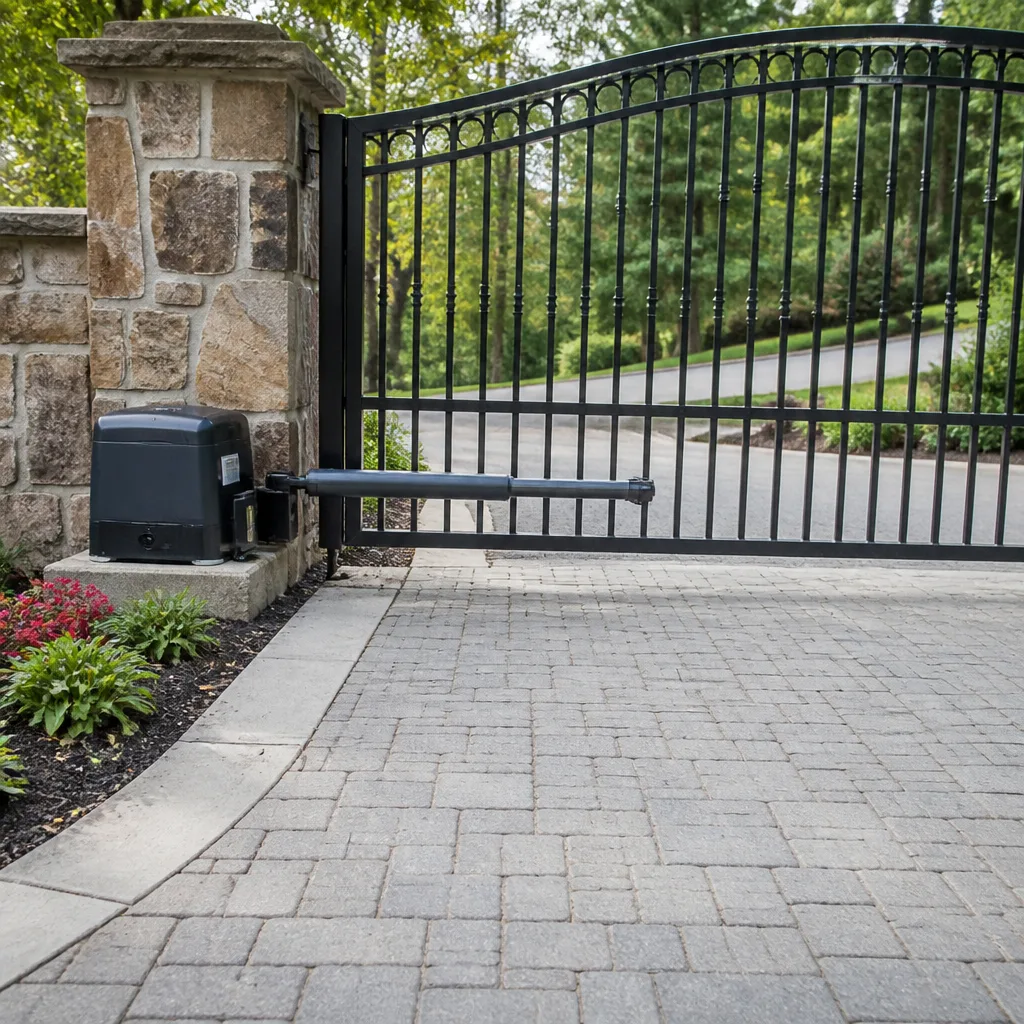
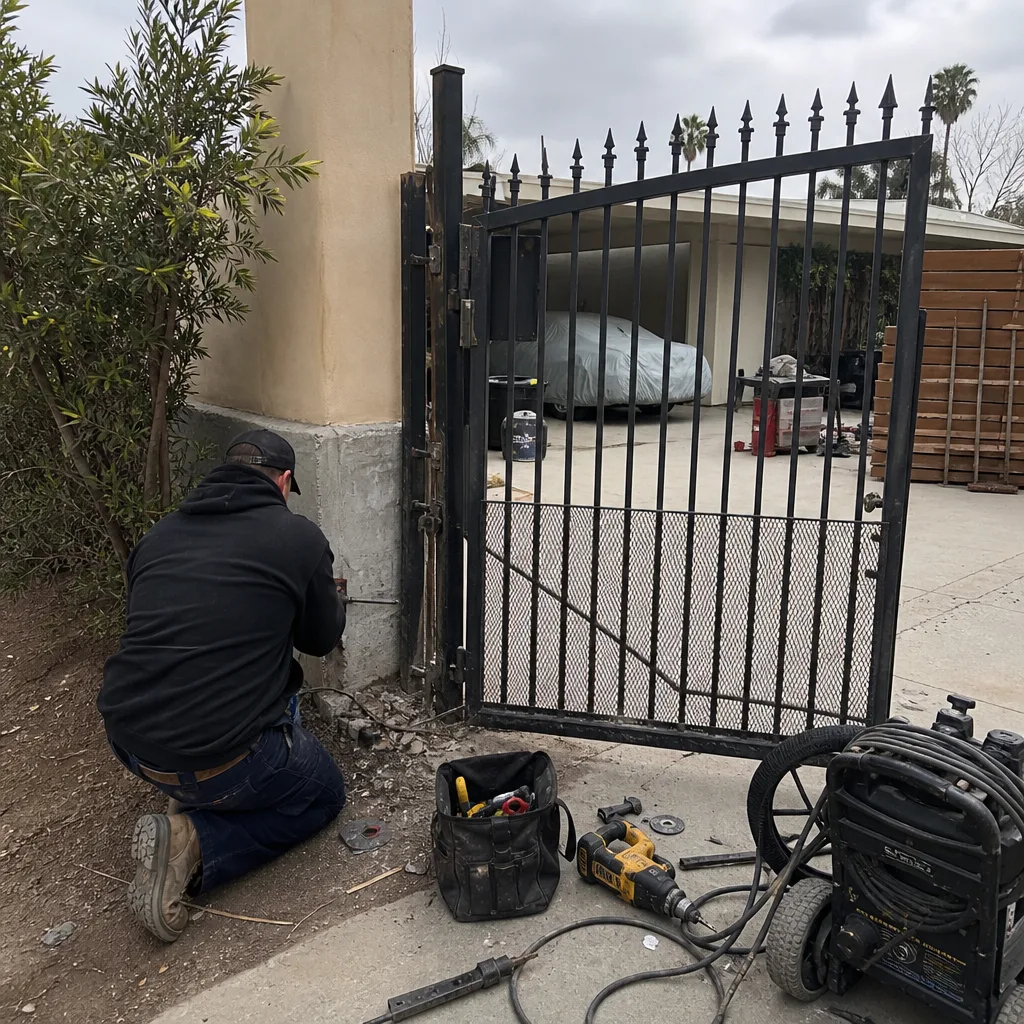 Before
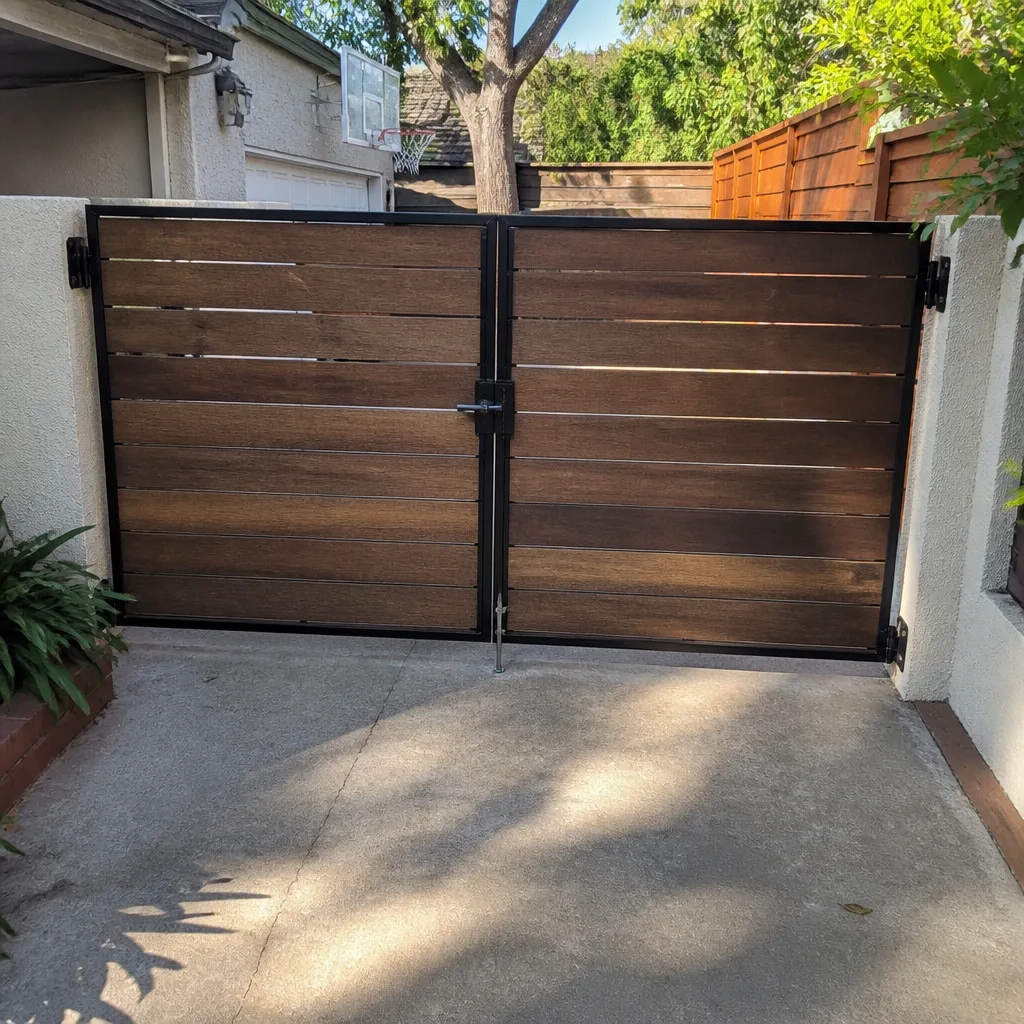 After
After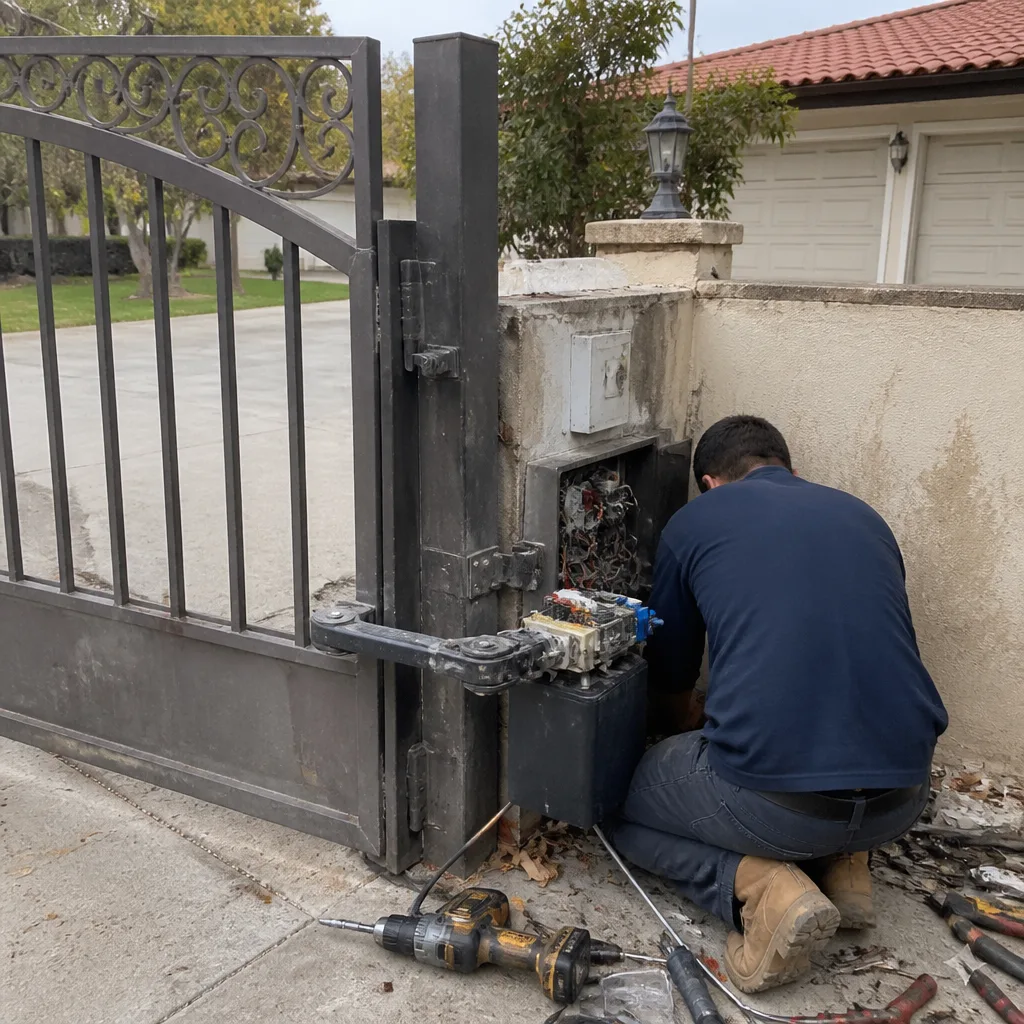 Before
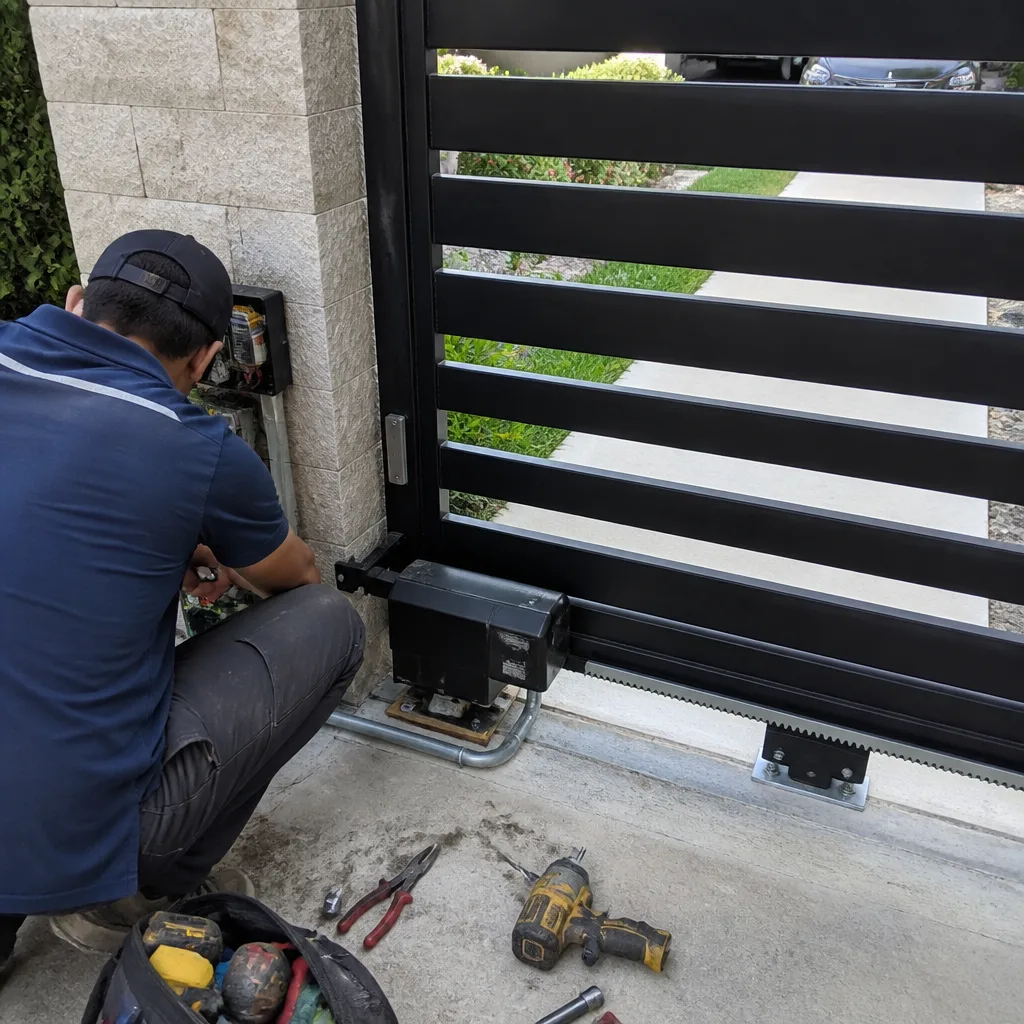 After
After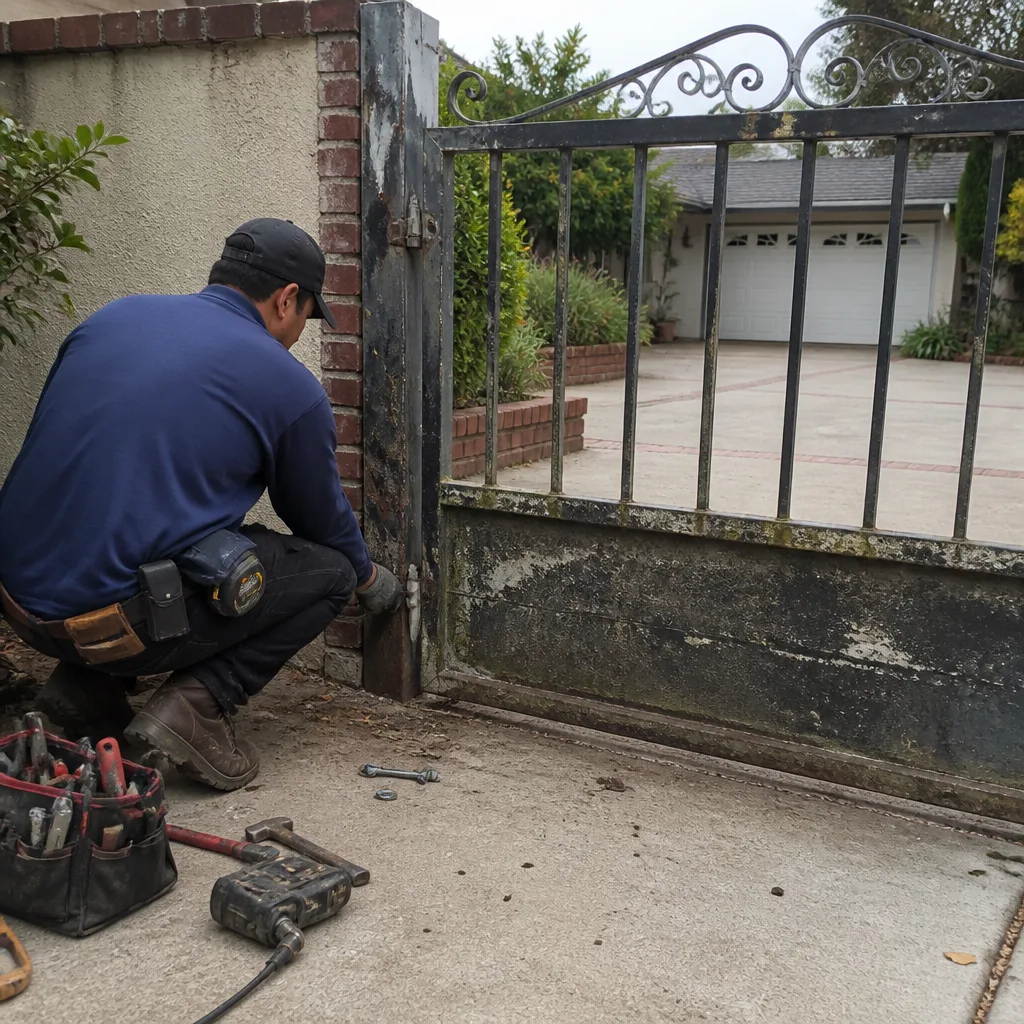 Before
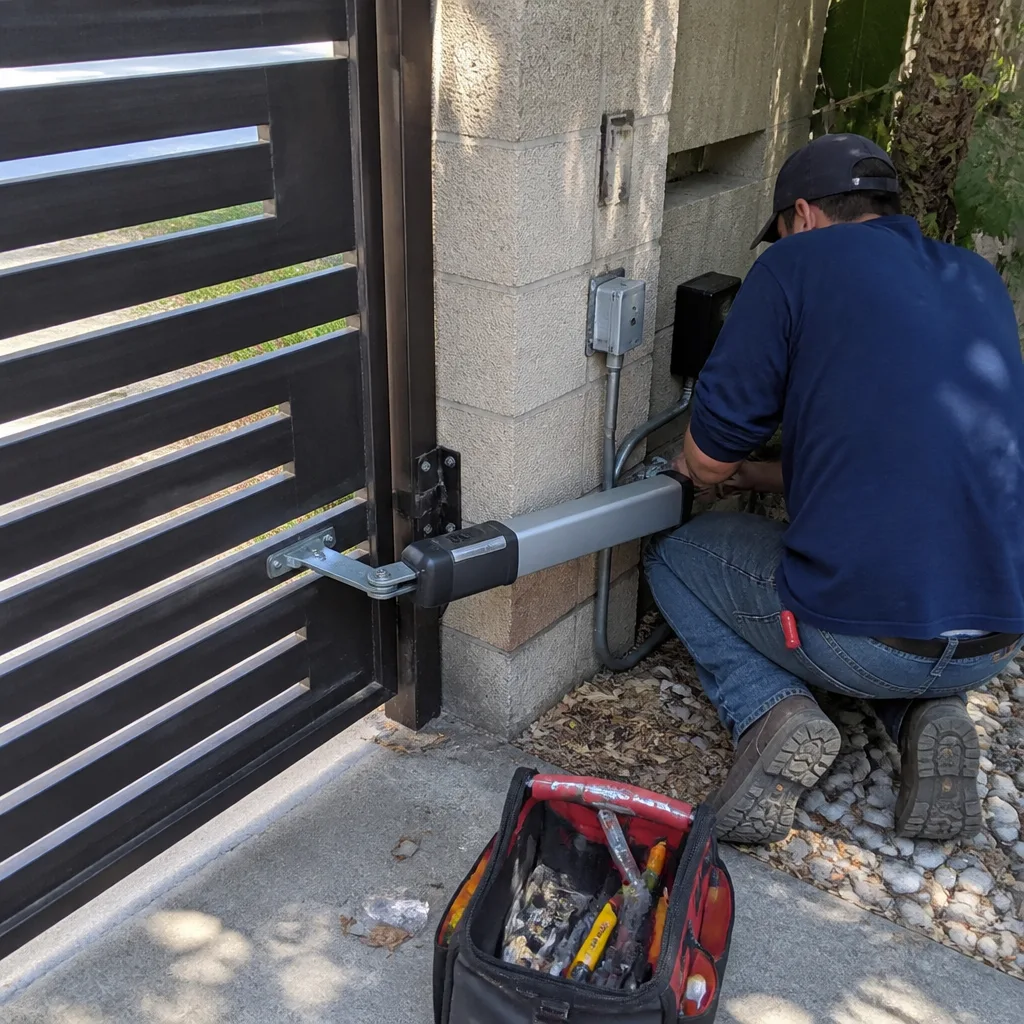 After
AfterThe Complete Guide to Gate Repair in Tarzana
Most gate problems in Tarzana trace back to three root causes that get ignored while homeowners chase symptoms. You hear the scrape, you see the sag, the opener groans and gives up, and somebody comes out, greases a hinge, tightens a bolt, and leaves. Six months later the gate is sagging again. This guide maps every common failure to its actual source so you stop paying for the same fix twice. By the time you finish reading, you’ll know how to read your gate the way an honest repairman does: as a structure, not a symptom. We’ve been providing Gate Repair services in Tarzana since 2001, and we’ve built this from what we see in driveways every week.
Quick Answer
Gate repair in Tarzana most often comes down to one of three root causes: a post shifting in the soil, a weld failing under repeated load, or an opener working double-time because the swing mechanics stopped being true long before the motor complained. A proper repair starts with diagnosing which of those three is failing, then fixing the source rather than the noise. Call (818) 514-7606 for a free estimate in Tarzana, and we’ll tell you what’s actually wrong before any work starts.
Table of Contents
- Why Tarzana Gates Fail: Post Heave and Hillside Grading
- The Difference Between Fixing a Symptom and Fixing a Source
- When the Gate Needs Repair Versus When the Fence Does
- Why Your Gate Opener Keeps Failing (It’s Probably Not the Motor)
- What a Responsible Tarzana Gate Contractor’s Site Visit Should Include
- What Same-Day Service Actually Means in Tarzana (And When It Shouldn’t)
- How Much Gate Repair Costs in Tarzana
- Common Mistakes to Avoid
Why Tarzana Gates Fail: Post Heave and Hillside Grading
If you live in the flats of Encino or Sherman Oaks, your gate posts sit in soil that mostly stays put. Tarzana is different. Much of the residential property south of Ventura Boulevard sits on graded hillsides with decomposed granite and silty clay that expands when it gets wet and contracts hard during the dry months. That cycle, year after year, slowly works gate posts out of plumb. A post that tilts half an inch doesn’t look like much, but at the latch end of a nine-foot gate, half an inch at the post is a two-inch drop in the leaf.
We see this most often in neighborhoods like the hillside streets off Reseda Boulevard and the older lots south of the Boulevard, where retaining walls and drainage redirect water through soil that was never great at holding a post in the first place. The gate starts to drag on the driveway, or the latch bolt misses the strike plate, and the homeowner assumes the gate itself is the problem. It isn’t. The post is moving.
Here’s what post heave actually does over time:
- Changes the hinge geometry so the gate leaf binds at the top corner instead of swinging freely
- Cracks the concrete collar around the post base, letting more water in and accelerating the cycle
- Puts lateral load on the hinge welds, which were never designed to carry the weight of a binding gate
- Overloads the opener because the motor now has to push through mechanical resistance every cycle
The fix is not to shim the hinges or grind down the drag point and call it done. The fix is to pull the post, set it deeper, pour a proper footing with drainage away from the base, and re-hang the gate so the leaves swing true. We weld on site, and we do this work in your driveway with the gate hanging where it belongs while we do it.
The Difference Between Fixing a Symptom and Fixing a Source
The gate Hal gets called back to most often isn’t one that was never repaired. It’s one that was “repaired” three times by three different guys who all addressed the squeak and missed the settling post underneath it. That’s the central problem with gate repair as an industry: it’s easy to charge for a quick fix that makes the noise stop, and harder to do the diagnostic work that keeps the noise from coming back, as we explore in our DIY vs Professional Gate Repair: The Tarzana Homeowner’s Decision Guide.
Here’s a simple way to think about it. A gate squeaks because metal is rubbing somewhere it shouldn’t. A gate sags because the structure holding it up is failing. If you grease the hinge on a sagging gate, the squeak goes away for two weeks, and then the hinge pin starts eating the hinge barrel because it’s carrying weight it was never meant to carry. That’s how a $40 lube job becomes a $400 hinge replacement, and how a $400 hinge replacement becomes a full post reset when the real problem finally shows itself.
Common symptoms and their actual sources:
- Squeak or screech at the hinge: Usually metal-on-metal wear from a hinge carrying weight it shouldn’t. The source is often post movement or gate sag, not lack of lubrication.
- Gate drags on the driveway: Almost always post heave or hinge wear, not a “warped” gate panel. Welders hear “warped panel” from homeowners who’ve had three bad diagnoses.
- Latch bolt won’t catch: The gate and the latch post have moved out of alignment. Fixing the latch without fixing the alignment is a two-week patch.
- Opener stops midway: The opener’s safety circuit likely detected resistance. The resistance usually comes from a gate that no longer swings freely.
- Gate doesn’t close all the way: Seasonal soil movement. It’s common in Tarzana to adjust a gate twice a year as the ground breathes, especially on hillside lots.
The rule we apply before touching anything is simple: find the source, fix it first, then address whatever the symptom did to the hardware. That’s the Gate Repair in Tarzana approach in one sentence. If a contractor can’t tell you what the source is before quoting a fix, you’re paying for a guess.
When the Gate Needs Repair Versus When the Fence Does
Here’s a distinction almost no gate guide makes, and it’s the one that wastes the most money in Tarzana. A gate is not an independent structure. It hangs on fence posts, or on gate posts that are connected to fence sections. When the fence itself starts leaning, or the post the gate hangs on is being pulled by the fence line, the gate will misbehave no matter how well you repair it.
We see this constantly on older Tarzana properties where the original wooden fence was replace with a block wall or a chain link run without re-setting the gate posts. The fence and the gate are now two different structures fighting each other. The gate gets blamed because it’s the part that moves and makes noise, but the actual failure is the fence section pulling the posts out of line.
How to tell which one needs work first:
- Stand ten feet back and look at the fence line on either side of the gate. If the fence has a visible lean or bow, that’s load transferring to the gate structure.
- Check the gap between the gate and the fence posts. If it’s narrow at the top and wide at the bottom (or vice versa), the fence is pulling the post.
- Watch the gate’s movement. If it swings freely from the hinge but still doesn’t meet the latch, the latch post has moved. The latch post is part of the fence unless it was set as a separate structural member.
- Press down on the gate leaf near the latch. If the whole post flexes, the post is loose in the ground, and no hinge work will fix that.
The money lesson: fixing the panel without fixing the post means you’ll fix it twice. We’ve been called out to gates where homeowners had already paid for new hinges, a new latch, and an opener board, and the gate still didn’t close right because nobody had re-set the post that was leaning two inches out of plumb. That’s not a gate problem. That’s a fence problem presenting as a gate problem. At Gatewood Fence & Gate home, we inspect the whole structure before we touch a single hinge.
Why Your Gate Opener Keeps Failing (It’s Probably Not the Motor)
Electric gate operators fail faster when the underlying swing or slide mechanics aren’t true. A gate opener is designed to move a balanced, freely swinging gate. When the gate binds, drags, or hangs on a corner, the motor has to work harder every cycle, which burns out circuit boards, strips gears, and triggers false safety stops. The homeowner, understandably, thinks the opener is the problem. In a lot of Tarzana gates, the opener is the victim.
We service nine major gate opener brands, including Viking, Ghost Controls, DoorKing, and Elite, and we see the same failure pattern across all of them. A Viking or DoorKing operator installed on a newly built, properly hung gate will run for fifteen years with minimal attention. That same operator installed on a gate that hasn’t swung true in five years will burn through a control board in eighteen months. The opener wasn’t bad. The gate it was attached to was bad.
Before you call anyone about an opener issue, check these things yourself:
- Disconnect the opener (most have a manual release handle) and swing the gate by hand. If it takes real effort to move, the opener was fighting that resistance every time.
- Listen for grinding or scraping at the hinge side while you move it. That’s mechanical friction the motor has to power through.
- Look at the gate’s position at rest. If one leaf is noticeably higher than the other, the post has moved and the opener is compensating with force.
- Check the wiring run where it enters the opener housing. Tarzana’s summer heat baked wire sheathing gets brittle, and intermittent power dropouts look like failed boards.
If the gate swings freely by hand and the opener still misbehaves, then it’s a genuine opener issue, and you can learn about our gate motor and opener service in Tarzana. But nine times out of ten when we’re called for a “dead opener,” the motor is fine and the gate has been binding for months. Fix the gate first, then let the opener do its job.
What a Responsible Tarzana Gate Contractor’s Site Visit Should Include
You can judge a gate contractor before they ever pick up a tool. The site visit tells you everything. A responsible contractor shows up, walks the gate, pulls out a level, checks the posts, swings the gate by hand, opens the opener housing, and measures the gap. A less responsible contractor quotes you over the phone without seeing anything, or shows up, looks at the gate for ninety seconds, and hands you a number. Here’s what a proper site visit in Tarzana should cover:
- Post inspection: Every post that touches the gate gets checked for plumb, movement, and concrete collar integrity. This is the root cause of most repairs, and it takes five minutes to check properly.
- Hinge and weld inspection: The contractor should look for cracking, elongation of hinge barrels, and signs the weld has been grinding. A good welder can spot metal fatigue before it fails.
- Manual swing test: With the opener disengaged, your gate should swing smoothly with one hand. If it doesn’t, the contractor should tell you why before quoting anything.
- Opener check: If you have an automatic opener, the contractor should open the housing, check the board for scorching, verify the safety edges and photo eyes work, and run a cycle.
- Ground inspection: The area around the posts should be checked for drainage, erosion, or tree roots pressing against the structure. Tarzana has mature oaks and liquidambar trees whose roots absolutely do push posts out of line.
- Written breakdown: You should leave the visit with a clear written estimate that separates post work, hardware work, and opener work. If it’s one lump number with no line items, ask why.
Three questions to ask if the contractor skips any of these steps:
- “What did you find when you checked the posts?” If they didn’t check them, they can’t diagnose the gate.
- “Is the opener working correctly, or is it fighting resistance?” If they can’t answer, they didn’t look.
- “What’s the source of the problem, not just the symptom?” A contractor who can’t answer this is guessing.
We do all of this on every site visit, and we don’t charge for the estimate. If you get another written estimate and want a second set of eyes, we’ll review it for free. That’s part of how we work in Tarzana.
What Same-Day Service Actually Means in Tarzana (And When It Shouldn’t)
Every gate repair company promises same-day service. Very few explain what that means. For a simple job, like replacing a broken hinge or adjusting a latch, same-day is realistic and we do it regularly. We keep common hinges, latch assemblies, and opener parts on the truck, and a quick hardware swap shouldn’t take more than an hour or two. That’s the kind of repair where “same-day” is honest.
For welded work, it’s different. A proper weld repair on a gate post or a hinge bracket in Tarzana requires cleaning the metal, clamping the pieces in alignment, welding, letting it cool naturally, and then grinding and finishing. Rushing a weld on a cast iron gate or a powder-coated steel gate creates two problems: the weld can crack when it cools too fast, and the heat can warp the metal you’re trying to fix. A repair that should last fifteen years gets rushed into one that fails in two.
What you should expect from a quality Tarzana gate contractor:
- Same-day service for hardware replacements, latch adjustments, and opener diagnostics, when the parts are standard stock
- Next-day service for most welded repairs, done on site in your driveway
- Same-week service for full post resets that require concrete work and cure time
- A clear timeline given before work starts, not after the truck is in your driveway
If a company promises same-day welded work on a structural repair, ask them how long the weld gets to cool before they hang the gate back on it. If they don’t have an answer, you’re talking to the wrong person. We’d rather tell you the truth about the timeline and do the job right than rush it and see you again in six months. You can read more about what full work involves in our Tarzana gate installation guide, which covers the same quality standards we apply to repairs.
How Much Gate Repair Costs in Tarzana
Gate repair pricing in Tarzana varies by the root cause, but here’s what we see across the hundreds of estimates we write each year, detailed in our Gate Repair Cost Breakdown: The Tarzana Homeowner’s Reference for 2026. Simple hardware replacements run on the low end. Structural work runs higher. Opener replacements are their own category.
Here are typical line-item ranges for Tarzana gate repair work in 2025:
- Hinge replacement (per hinge): $120 to $250, depending on gate weight and whether welding is needed
- Latch adjustment or replacement: $80 to $180
- Post reset (single post): $600 to $1,400, depending on depth, concrete work, and whether the gate needs re-hanging after
- Weld repair (per location): $150 to $400, depending on the extent of the crack and metal prep
- Opener control board replacement: $250 to $600, brand-dependent
- Full opener replacement (installed): $1,200 to $2,800, depending on gate weight and brand
- Safety edge or photo eye replacement: $150 to $350 per component
Every quote we give in Tarzana is written, itemized, and agreed to before any work starts. No trip charge inside the county. No doorknob surprise. Any repair over $200 gets $40 off, and seniors and veterans get a permanent 10% discount. We also offer a free second opinion on any written estimate you’ve received from another company. If the number you’ve been quoted seems high, bring it to us and we’ll tell you honestly whether it’s fair.
Common Mistakes to Avoid
- Lubricating a sagging gate: Grease quiets a hinge for a week or two, but if the gate is sagging, the hinge is carrying weight it shouldn’t. The squeak comes back because the problem never left.
- Replacing the opener before checking the gate: A new opener on a binding gate will fail just like the old one did. The gate comes first, always.
- Shimming hinges to compensate for post movement: Shims are a temporary patch. Tarzana’s expanding soil will keep pushing the post, and the shims will make the misalignment worse over time.
- Skipping the post inspection: The post is where gate problems live. If your contractor doesn’t check it, they’re not diagnosing anything.
- Accepting a phone quote for structural work: No honest contractor can quote a post reset without seeing the post, the soil, and the gate. Phone quotes for structural work are guesses.
- Fixing the gate while the fence leans: If the fence is pulling the gate structure out of line, any gate repair is temporary. Fix the fence first, then the gate stays fixed.
- Ignoring seasonal movement: Tarzana gates move with the seasons. If your gate only misbehaves in March and October, that’s soil expansion and contraction. Get the posts set deep enough and it stops.
When to Call a Professional
Call a professional the moment you see structural movement, not just noise. If the post is leaning, the weld is cracked, the gate is dragging, or the opener is tripping safety stops, you have a compound problem that gets more expensive the longer it goes. A cracked weld can become a snapped gate. A loose post can become a gate off its hinges. If you’re in Tarzana and you’re not sure what you’re looking at, Gatewood Fence & Gate offers free estimates at (818) 514-7606. We’ll come out, walk the gate with you, and tell you what’s actually going on, whether you hire us or not.
Frequently Asked Questions
Most gate repairs in Tarzana run between $120 and $1,400, depending on the root cause. Simple hardware like hinges and latches sits on the low end, while full post resets and structural welding run higher. Every quote we give is written and agreed before work starts, and repairs over $200 get $40 off. Call (818) 514-7606 for an exact quote, free.
We can usually fix hardware failures like broken hinges, bad latches, and opener diagnostics the same day in Tarzana, since we stock common parts on the truck. Welded repairs usually happen the next day, because a proper weld needs time to cool before the gate goes back on it. Call (818) 514-7606 and we’ll tell you honestly which category your repair falls into.
Tarzana’s clay soil expands when it rains and contracts when it dries, so your gate posts shift slightly with the seasons. That’s why gates often drag in March and October even when they’re fine all summer. The permanent fix is setting the posts deep enough to sit below the movement layer, with proper drainage.
Probably not. When a gate opener stops midway, it’s usually tripping its safety circuit because the gate is binding. Disconnect the opener and swing the gate by hand. If it takes effort to move, the gate needs mechanical repair before anything about the opener should be touched. Start there and you’ll avoid replacing a perfectly good motor.
Yes. We’re certified to service Viking, Ghost Controls, DoorKing, and Elite gate operators, along with five other major brands. If your opener is a brand we don’t service, we’ll tell you that on the phone instead of wasting your time.
Bring it to us. We offer a free second opinion on any written estimate in Tarzana. We’ll go through it line by line and tell you whether the price is fair, what we’d do differently, and whether there’s work listed that doesn’t need doing. Call (818) 514-7606 and ask for Hal.
The Bottom Line
Fix the source before the symptom, or you’ll pay for the symptom twice. In Tarzana, that means checking the posts first, the fence second, the gate third, and the opener last. A gate that swings true will keep its opener alive for years. A gate that binds will eat every part you put on it. If you’re going to repair a gate, repair the actual gate. For more guides & resources, or if you want a second opinion, a written estimate review, or just someone to tell you what’s really wrong, call (818) 514-7606. We’ve been doing this in Tarzana since 2001, and the name on the shop is the same name that answers the phone.
Written by Hal Gatewood, Owner at Gatewood Fence & Gate, serving Tarzana since 2001.