
Last updated August 26, 2026
Free on-site gate assessment - hinges, posts, and your LiftMaster or Nice gate operator checked before anything is quoted
The assessment is free and the quote is the invoice.
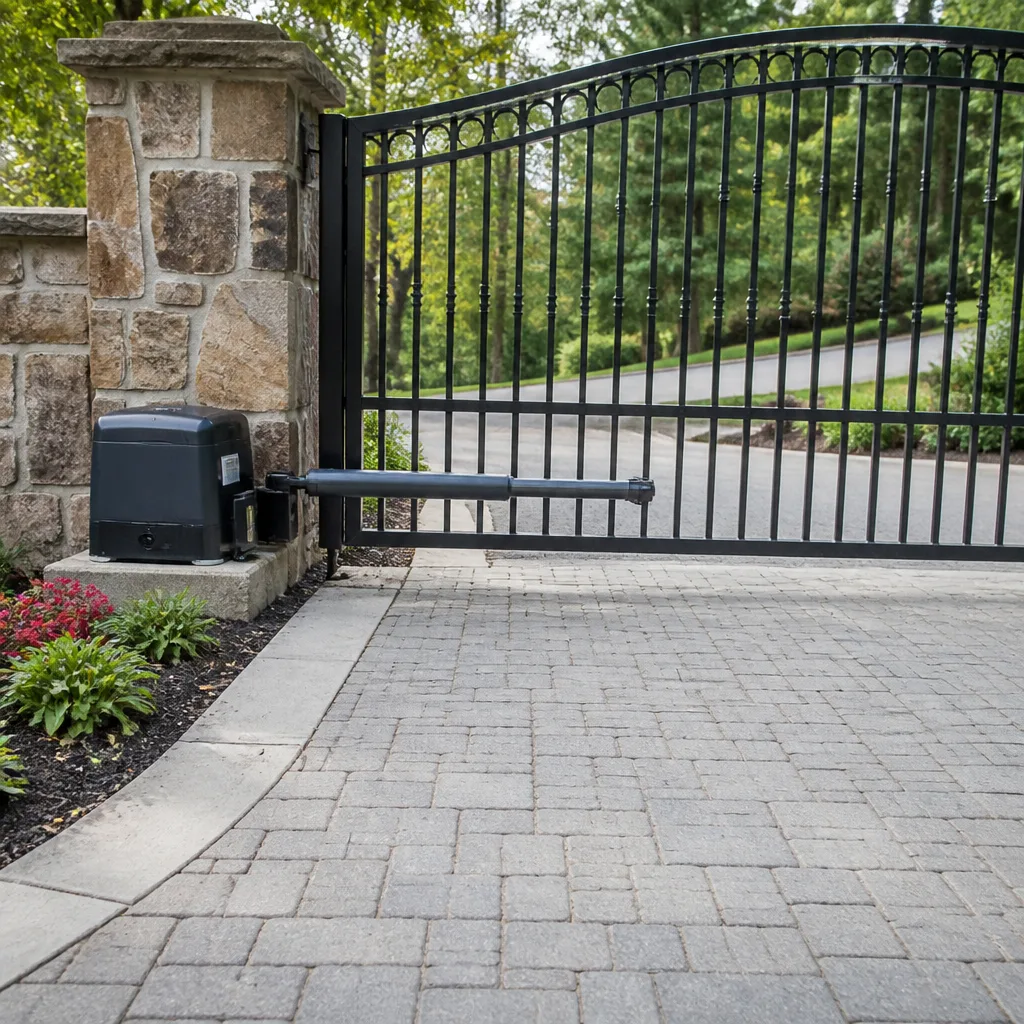
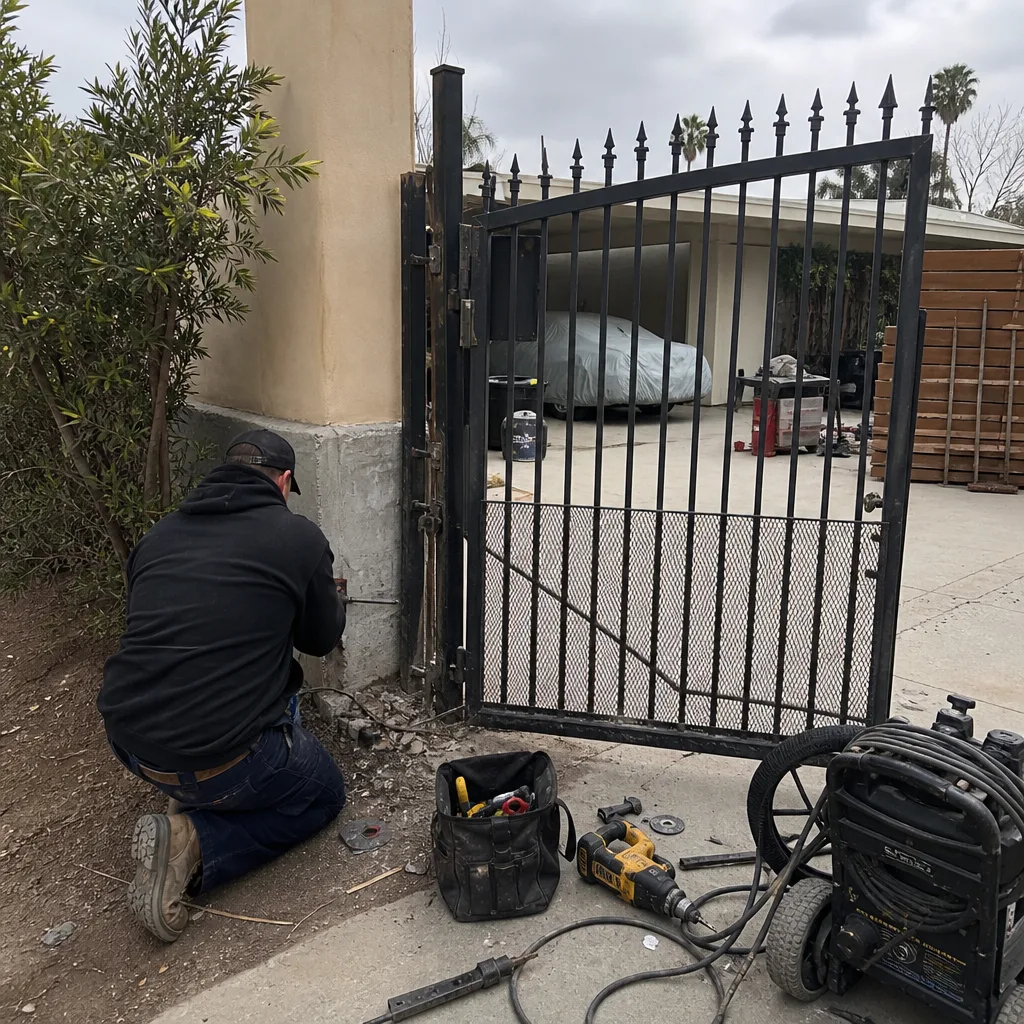 Before
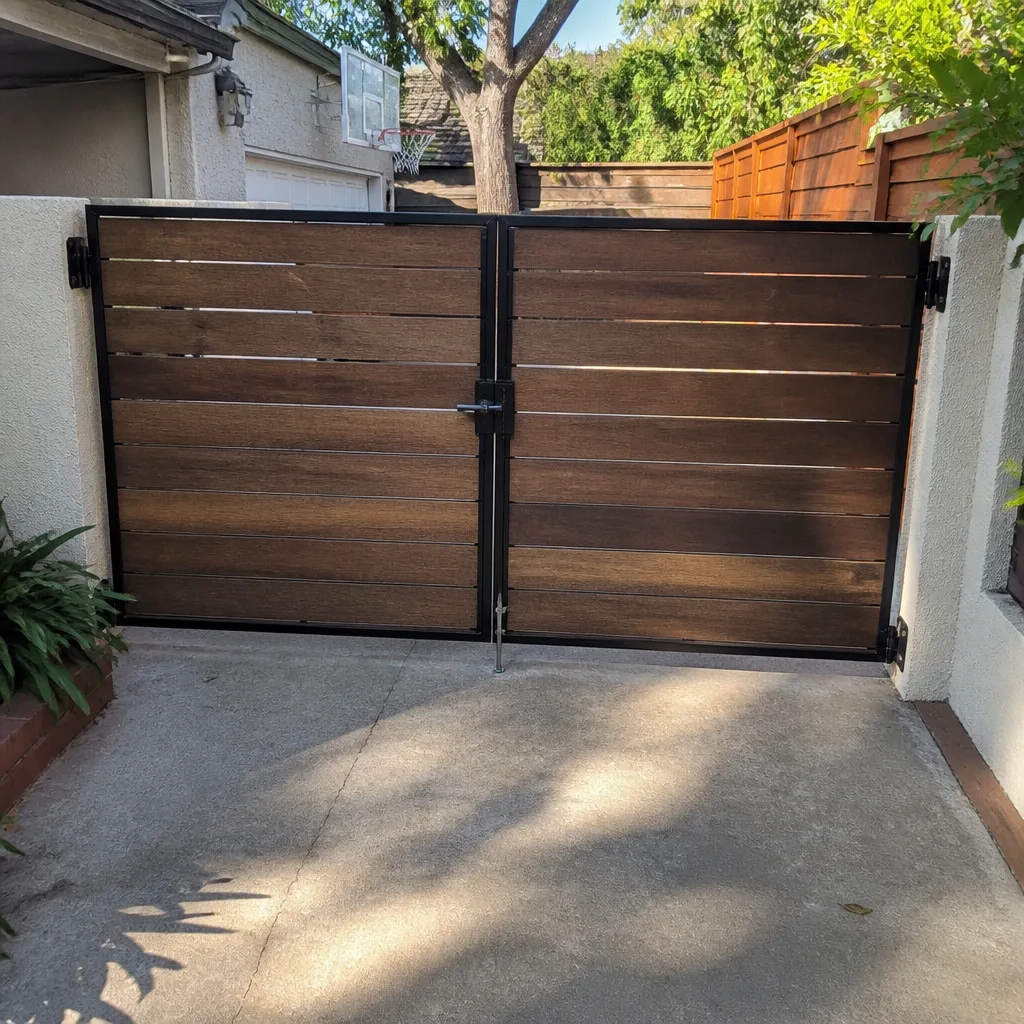 After
After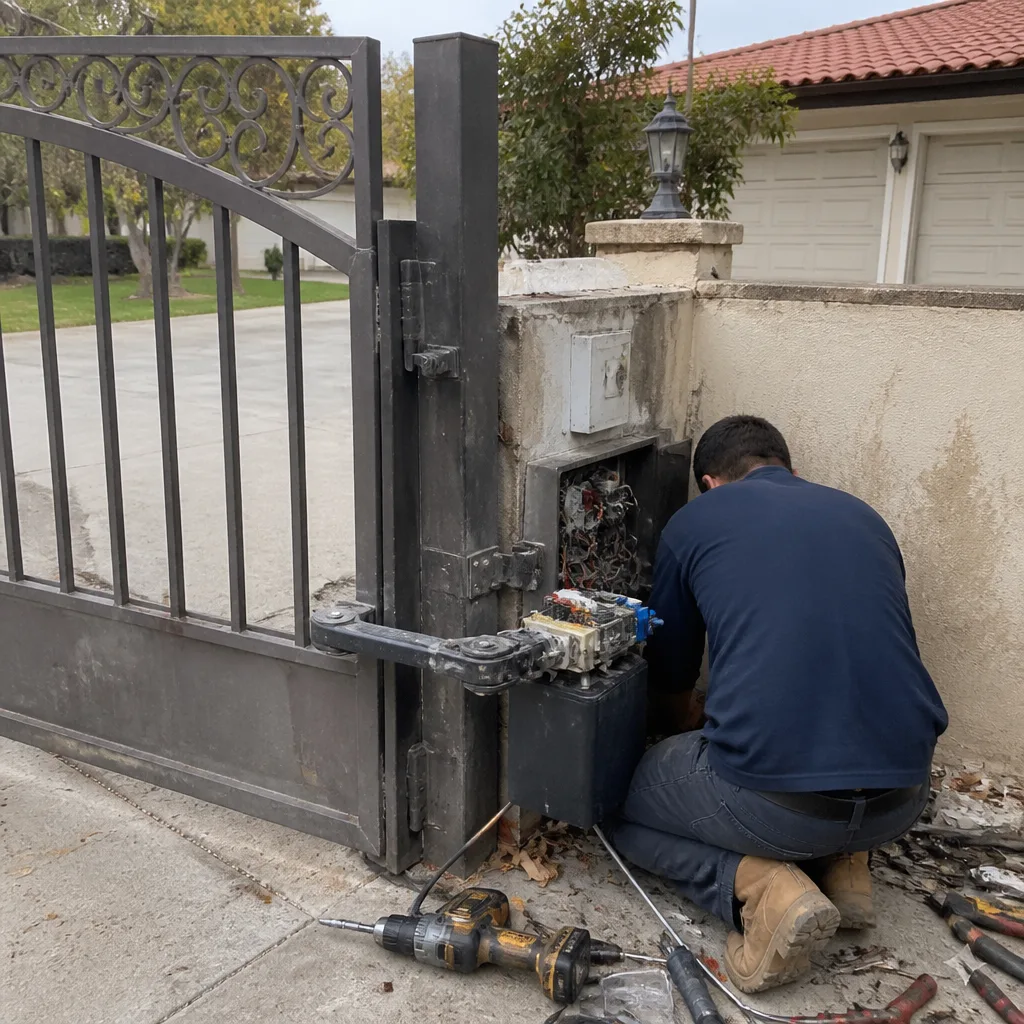 Before
 After
After Before
 After
AfterSeasonal Gate Repair Care for Tarzana: Year-Round Homeowner’s Guide
The gates that fail most dramatically in July in Tarzana usually started their decline in January. The wet ground heaves the post, the misalignment stresses the operator all spring, and by August the motor burns out on the hottest day of the year. Most homeowners never see it coming because they only look at the gate when it stops working. This guide breaks the year into four mechanical stress cycles that Tarzana actually has, walks you through what to check in each window, and shows you how to catch a $40 fix before it becomes a $1,400 replacement. For deeper reading, see The Complete Guide to Gate Repair in Tarzana.
Quick Answer
In Tarzana, you should inspect your gate four times a year: in March after winter rain has saturated the clay-heavy soil, in May before summer heat stresses electronics, in October once Santa Ana wind season begins, and once in December to prepare hinges and operators for the wet months. Each check takes about five minutes and targets the specific failure mode that season creates. Catch a sagging hinge post in March and you replace a $12 bracket. Miss it, and you’re replacing an operator in August.
Table of Contents
- January through March: The Ground Wants to Move Your Gate
- April through May: The Highest-Leverage Maintenance Window
- June through August: Heat, Motors, and the July Failure Spike
- September through October: Santa Ana Winds and Hardware Stress
- November through December: Prepping for Wet Ground Season
- The Five-Minute Monthly Log That Catches 80% of Problems
- Common Mistakes to Avoid
- When to Call a Professional
- Frequently Asked Questions
- The Bottom Line
January through March: The Ground Wants to Move Your Gate
Tarzana sits on a mix of clay-heavy loam that behaves like a sponge. When winter rains arrive, that soil absorbs water, expands, and pushes against the concrete footings that hold your gate posts. When the ground dries out in spring, it contracts. That cycle of expansion and contraction is the root cause of most gate failures we see, and it does not happen evenly. The uphill side of a post gets wetter than the downhill side, the post tilts a few degrees, and suddenly the gate that swung cleanly for a decade now drags across the driveway.
A gate sags in the hinge post, not in the middle, and that is where we start. Here is what happens in the first three months of the year, and what to look for before the ground dries and locks that shifted position in place.
What Winter Ground Saturation Does to Post Plumb
Concrete footings in Tarzana are typically poured 24 to 36 inches deep. That sounds stable, but saturated clay exerts enough lateral pressure to move a post that deep by a half inch or more, especially if the footing was poured without rebar or the concrete was mixed thin. A half inch of movement at the base translates to several inches of drift at the top of a 6-foot gate leaf.
We have pulled posts in Tarzana neighborhoods like Melody Acres and Corbin Palms that had shifted so far the gate no longer latched. In every case, the homeowner told us the gate worked fine in December. The damage accumulated silently through January and February while the ground was wet.
The March Check: Eight Things to Inspect Before the Ground Dries
- Post plumb: Place a 4-foot level against the gate post on two adjacent faces. Any gap larger than a quarter inch at the top means the post has moved. Check both the hinge post and the latch post.
- Gate-to-post gap: Open and close the gate fully. The gap between the gate leaf and the post should stay consistent. A gap that widens at the top and tightens at the bottom means the post has tilted.
- Hinge wear: Lift the gate slightly at the latch end. More than a half inch of vertical play means hinge bearings or bushings are worn, and a shifted post accelerates that wear.
- Latch alignment: Close the gate slowly. The latch tongue should enter the strike plate without scraping. If it catches on the edge, the geometry has changed.
- Operator chain or belt tension: For slide gates, check that the chain or belt is not scraping the rail or rubbing against the cover. Misalignment from post movement puts lateral load on chains and shortens their life dramatically.
- Concrete cracking: Walk around the footing. Hairline cracks that were not there in December are the first sign of ground pressure. Cracks wider than an eighth of an inch need professional attention.
- Weep holes and drainage: Make sure water is not pooling against the gate post base. Tarzana’s clay holds water against concrete for weeks after a storm, and that is what causes the expansion in the first place.
- Weld joints: Surface rust is normal. A crack running through a weld is not. Wet-season movement concentrates stress at weld connections, and a cracked weld will fail completely under the next Santa Ana gust, not during the calm wet months.
If the post has shifted more than a half inch out of plumb, the fix is not shimming the gate. The fix is resetting the post in new concrete with proper drainage. The March window is the right time to do it, before summer heat turns a wet, workable footing into fully cured concrete that locks the post into whatever position it drifted to.
Our Gate Repair in Tarzana work in March is almost always post-related. We have been doing it since 2001, and the pattern does not change: the ground moves what is in it, and the gate just reports the movement.
April through May: The Highest-Leverage Maintenance Window
If you touch your gate once all year, do it in May. The ground has dried enough to make repairs stable, but the summer heat has not yet arrived to stress electronics and bake out lubricants. This is the window where a competent contractor can address everything that winter did to your gate, and it is also the window where homeowners discover problems that have been developing since January but only now become visible. Not sure whether to DIY or call a pro? Read our DIY vs Professional Gate Repair: The Tarzana Homeowner’s Decision Guide.
Show me the gate closing on its own and I’ll show you where it’s failing. That is not a riddle. A gate that seems to work but closes slower than it did last year, runs the operator a few seconds longer, or trips the safety reverse more often is telling you something. May is the month to listen.
The Pre-Heat Inspection Checklist
- Operator current draw: A healthy swing gate operator on a residential gate in Tarzana pulls between 3 and 6 amps during normal operation. An operator pulling more than that is working against resistance: a bent track, a dry wheel, a failing capacitor. The extra load converts to heat, and heat kills circuit boards.
- Lubrication points: Hinge pins, pivot bearings, and slide-gate wheels need lubrication before summer, not during it. Use a lithium grease rated for high temperature. Most Tarzana summers push gate hardware surface temperatures past 130 degrees, and cheap spray lube thins out and drips off by June.
- Photo eye alignment: Dust and spider webs build up on safety sensor lenses over winter. Clean them with a dry cloth, then verify the gate reverses when the beam is broken. A misaligned eye means the gate will refuse to close, and in Tarzana heat that means the operator runs longer and works harder while the homeowner holds the button.
- Battery backup condition: If your operator has a battery backup for power outages, May is the time to test it. Battery capacity drops in heat, and a battery that barely holds a charge in May will be dead by August during a heat-related outage.
- Track and wheel condition for slide gates: Roll the gate manually. It should move with steady, even resistance. If there are flat spots on the wheels or rough patches on the track, square them away now. A slide gate that drags in May will burn out its operator in July.
- All bolts, nuts, and set screws: Walk the gate with a wrench. Thermal expansion and contraction through spring loosens hardware, and every loose fastener adds to the vibration load on the next fastener down the line. Tighten what is loose, replace what is stripped.
Why the May Window Matters More Than Any Other
Here is the Tarzana-specific reality: repair demand in July and August is triple what it is in May, but the underlying problems were present and findable in May. A homeowner who spends 30 minutes on this checklist in May avoids the two-week wait for a contractor in July, pays for a $75 bracket instead of a $600 circuit board, and never has to leave a gate propped open while the operator is out being rebuilt.
We offer free second opinions on any written estimate. If another company tells you in May that your gate needs a new operator, bring us the written estimate and we will tell you whether that is true or whether you need a $40 set of bushings and a brake adjustment. Hal Gatewood’s name is on the shop, and the shop is down the road, which is the oldest accountability there is.
June through August: Heat, Motors, and the July Failure Spike
Tarzana regularly sees summer days over 95 degrees, and gate hardware sitting in direct sun gets hotter than the air temperature. A black iron gate facing west can reach 140 degrees on a 100-degree afternoon. Metal expands when it heats. Tolerances that were fine in May disappear in July, and here is the uncomfortable truth about heat and gate operators: every 18 degrees of additional heat halves the life of the electronics inside.
This is why July is the busiest month for emergency our Gate Repair services in Tarzana. Not because July is harder on a gate than any other month in isolation, but because July is the month when everything that accumulated since January finally exceeds what the hardware can tolerate.
How Thermal Expansion Breeds Summer Failures
Steel expands roughly 0.0000065 inches per inch per degree Fahrenheit. On a 12-foot steel gate that heats from a 60-degree night to a 120-degree afternoon surface temperature, that is a little over a half inch of linear growth. That half inch is why a gate that clears its latch in the morning scrapes it at 3 p.m. It is why a slide gate that runs smooth at 8 a.m. grinds to a stop at 2 p.m. And it is why summer is the season of “it worked this morning” service calls.
Most gate installers in Tarzana do not account for this. They set the clearance based on a comfortable spring day, and when the gate grows in July, the metal finds the nearest obstacle and bends against it. Fix the panel without the post and you’ll fix it twice.
What Heat Does to Lubricants, Seals, and Rubber
Lithium grease breaks down above roughly 250 degrees, but it thins and migrates at much lower temperatures than that. Grease that was applied to hinge pins in May has dripped off the bottom of the hinge and puddled on the concrete by August. The hinge runs metal-on-metal, the gate gets harder to move, and the operator works against increasing resistance until something in the drive train fails.
UV is just as brutal. The rubber stops that cushion the gate at each end of travel harden in direct summer sun. Once they harden, they stop absorbing impact energy, and that energy transfers directly into the gate panel and the mounting hardware. The result is cracked welds at the stop mounts, bent gate frames, and operators that trip their internal overload sensors because the gate now slams into a hard stop instead of a cushioned one.
Summer Operator Care
- Check the operator’s internal temperature: After the gate has run several times on a hot afternoon, place a hand on the operator housing. Warm is normal. Too hot to hold for ten seconds means the motor is overworking or the capacitor is failing.
- Run the gate at dusk once a week: Listen for a change in pitch. A motor that whines where it used to hum is working harder. Find out why in June, not August.
- Keep the operator cover vents clear: Dust, dead leaves, and spider debris clog ventilation screens and trap heat inside the housing. Blown-out control boards from overheating are the most expensive $3 problem a homeowner can have.
- Do not pressure wash the gate in summer: Thermal shock from cold water on a 130-degree powder coating causes micro-cracking that lets moisture into the metal and accelerates rust. Clean with a hose and a soft brush at dawn or dusk.
For Gate Motor & Opener service in Tarzana, the summer months are dominated by bridge rectifiers that failed in afternoon heat and capacitors that simply aged out. These components are designed to be serviced, not replaced with a whole new unit. We rebuild or replace individual components when that is the right fix, and we do not recommend a new operator just because the current one got hot.
September through October: Santa Ana Winds and Hardware Stress
Santa Ana season in Tarzana means sustained winds of 20 to 30 miles per hour with gusts above 50, and those gusts arrive from the northeast, straight down the canyons. For a swing gate, that wind hits the flat panel like a sail. A 6-foot by 10-foot solid gate has 60 square feet of surface area. A 50 mph gust applies roughly 800 pounds of force against that surface. Every bit of that force is transmitted through the hinge and stop hardware.
Here is what we see in the weeks after a strong Santa Ana event, and why the damage is not always visible the day after the wind dies down.
What Gusts Do to Stop Hardware and Latches
When wind slams a gate open, the gate leaf accelerates until the physical stop arrests it. Each impact drives shock through the stop bracket, through the gate panel, and into the post. Over a single windy night, a poorly damped gate can hit its stop dozens of times. What fails first is the stop bracket or the rubber bumper itself. What fails later, sometimes weeks later, is the hinge weld that has been micro-fractured by thousands of cycles of sudden loading.
Latches take a different kind of damage. A gate rattling in the wind constantly works the latch tongue against the strike plate. The edge rounds off. Then a wind event hits when the gate is not fully latched, the latch pops open, and the gate swings free at the worst possible moment. We have repaired gates in Tarzana that broke loose during Santa Ana winds and took out the adjacent fence line, the mailbox, and once the side mirror on a parked car.
Post-Wind Inspection: Two Checks, Two Weeks Apart
- Within 24 hours: Visually inspect every visible weld on the gate and the hardware for cracks. Flex the gate by hand and watch for movement at joints that should be rigid. Check that the latch still engages from both the open and closed positions. Test the manual release and re-engage the operator.
- Two weeks after: Re-inspect the same welds. Stress fractures in mild steel do not always open immediately after the loading event; they often take days to propagate to the surface. Check the gate’s closing speed relative to pre-wind behavior. A gate that closes a little slower now has a deeper problem developing.
If the wind event was strong enough to bend the gate panel itself, the damage is structural and will not repair itself with paint. A bent panel throws the gate out of balance, which loads the hinges unevenly, which wears the lower hinge dramatically, which eventually shears it. This is a cascade, and the only way to stop it is to fix the panel at the first sign of a bend, not after the failure.
November through December: Prepping for Wet Ground Season
The calendar says the growing season is over, but for gate hardware in Tarzana, winter is when the ground does its heaviest work. The goal of a December maintenance pass is simple: send the gate into the rain with the best possible chance of surviving the ground movement that will happen in January and February.
This is also the window where we recommend a full inspection by a professional. Even a thorough homeowner cannot assess the condition of internal gearbox components, capacitor health, or the state of buried wiring without opening the operator and testing it under load. December is the right time because any repair done now will be stable through the wet season.
Winter Prep Steps
- Drainage audit: Walk the gate line during a rainstorm. Water should not pool against any post. If it does, regrade the soil or install a french drain before the peak rain months. A post sitting in standing water through January is a post that will move.
- Seal cracks in the concrete: Every crack in a footing is an entry point for water that will expand and contract with temperature. Fill any crack wider than a pencil lead with an appropriate concrete patching compound.
- Replace any worn rubber: Stops, edge seals, and weather stripping that are hard or split in December will only get worse. Replace them now while the weather is still mild enough for adhesives to cure properly.
- Reapply high-temperature grease to hinges and pins: Do this before the rain. A freshly greased hinge pin has a barrier against water. A dry pin absorbs moisture, corrodes, and seizes by February.
- Test the operator’s force settings: After three seasons of heat, wind, and movement, an operator’s internal reverse sensors may be out of calibration. A gate that reverses on a dry day is annoying; a gate that fails to reverse when a child is in the path is something else entirely.
- Document everything: Take date-stamped photos of the gate, hinges, wheels, track, and operator internals. These photos are your baseline for comparing against in March. You cannot see a slow change without a reference point.
If you are considering a full Gate Installation in Tarzana, December is also the right time to begin that conversation. New installations done in winter have the advantage of going through the full wet-ground cycle before summer heat, which means any settling that is going to happen happens under warranty, not three years after you wrote the check.
The Five-Minute Monthly Log That Catches 80% of Problems
The single best tool for gate longevity is not a wrench or a grease gun. It is a notebook. A five-minute monthly log entry creates a written record of how your gate behaves, and that record lets you spot changes long before they become failures. Homeowners who keep this log call us when a part is beginning to fail. Homeowners who do not call us when the gate will not move. The phone call costs the same either way. The repair is five times more expensive in the second scenario.
Here is the log routine, and it takes literally five minutes once a month:
- Date and time: Write it down. Without a date, you have a diary, not a trend line.
- Open-to-close time: The single most important metric. A gate that takes 12 seconds to open in January and 14 seconds in March is telling you something is wrong. Time it once a month and write down the number.
- Noise level: One line: “quiet,” “slight squeak at hinge,” “grinding from wheel area.” Noise changes before failure. Always.
- Visual check of the gap: Is the gate-to-post gap consistent from top to bottom? Yes or no. Ten seconds of looking.
- Latch engagement: Does the latch seat cleanly, or does it scrape? One sentence.
- Anything unusual: “Gate reversed twice during closing,” “operator housing unusually hot,” “saw hairline crack near lower hinge weld.” If you see something, write it down.
Carry that notebook with you to our shop on Burbank Boulevard and we will read it together. That kind of record tells us more about what is happening to your gate than any diagnostic tool, and it takes you five minutes a month to create.
Common Mistakes to Avoid
- Waiting until the gate fails to call anyone. A gate that moves slowly, sits crooked, or makes new noise is already telling you the system is degrading. The repair that costs $150 in March costs $1,200 in July because the failure took other components with it. We have been at this since 2001 in Tarzana, and we have never once seen a gate problem fix itself by being ignored.
- Spraying WD-40 on everything. WD-40 is a water displacer, not a lubricant. It will strip away the grease that is doing the actual work and leave the surface to run dry. Use a proper lithium grease on hinge pins and a silicone spray on rollers and tracks, never a penetrating oil.
- Power washing a gate that is hot or actively corroding. High-pressure water drives moisture into the metal through micro-cracks and accelerates rust. On a 130-degree powder-coated panel, the thermal shock alone creates new cracks. A garden hose and soft brush at dawn is the right approach.
- Adjusting the limit switches to compensate for a sagging gate. The gate sags in the post, not in the panel. Changing the operator’s travel limits to make a crooked gate close all the way just makes the operator push harder against the obstruction, which shortens its life. Fix the post, and the limits will work themselves out.
- Ignoring a gate that works fine after the wind storm. The damage from a Santa Ana event is frequently internal: micro-fractures in welds, partially sheared bolts, gear teeth that took an impact load. A gate that survived last month’s 55 mph gust did not necessarily survive it without damage. Inspect after every significant wind event, not just the ones that break something.
- Doing nothing between the annual checkup. The biggest mistake of all. The gate is the heaviest moving object on your property, it operates hundreds of times a month, and it is exposed to the elements 365 days a year in a climate that stresses it differently every season. A five-minute monthly log is not a nice-to-have. It is the cheapest insurance you will ever buy.
When to Call a Professional
Some gate work is genuinely dangerous and no homeowner should attempt it. Gate springs under tension can release without warning and take off a finger or worse. Slide gate chains in motion have the same pinch and crush hazards as industrial machinery. An operator opens up to live 120-volt circuits that do not care that you are good with tools. If your gate has a damaged spring, a failing operator, a shifted post that needs resetting, or any problem involving the drive mechanism or electrical system, call someone who does this every day.
Gatewood Fence & Gate offers free estimates in Tarzana, and when you call (818) 514-7606, a live person answers the phone. No voicemail, no menu tree, no call center three time zones away. Hal Gatewood’s name is on the shop, his address is published, and he has been serving this community since 2001. If you are not sure whether a problem is urgent, call anyway. The estimate is free, and the peace of knowing is worth the phone call. For more guides & resources, visit our blog.
Frequently Asked Questions
A full professional service once a year is adequate for most residential gates in Tarzana, with the ideal timing in late May before summer heat arrives. Between professional services, a five-minute monthly self-check catches developing problems early. Gates on heavy use cycles, such as multi-family properties or homes where the gate cycles more than 20 times a day, benefit from twice-yearly professional servicing, in May and again in December.
A shifted gate post shows up as a gate-to-post gap that is wider at the top than the bottom, a gate that drags on the ground at one specific point in its travel arc, a latch that no longer seats cleanly without lifting the gate, or fresh hairline cracks radiating out from the post base in the concrete. Any two of these signs together mean the post has moved, and the fix involves resetting it, not shimming the gate. Call (818) 514-7606 for a free assessment, and we will tell you the truth about what is shifting.
We strongly advise against it. Gate operators contain live electrical circuits, large capacitors that store charge even after power is disconnected, and moving components that exert enough force to remove a finger. What looks like a simple motor swap on YouTube is a job where one wrong connection creates a fire hazard or a gate that reverses at the wrong time. The trained professionals at Gatewood Fence & Gate service nine major brands, including BFT and Linear, and diagnosing a motor problem correctly is the kind of thing that comes from 29 years of doing it, not from a video.
We service and repair LiftMaster, FAAC, BFT, Linear, Viking, Ghost Controls, DoorKing, Elite, and Mighty Mule. That covers most openers installed on residential and light commercial gates in Tarzana over the past three decades. We stock common replacement parts for these brands in our shop, which means many repairs are done same day, no waiting on a parts delivery from across the country.
A complete residential gate installation in Tarzana typically runs from $3,500 to $7,500 for a standard single-leaf swing gate with an operator, depending on gate material, size, and whether new footings or electrical runs are required. Higher-end Ipe wood or custom ornamental steel gates can run significantly more. Every installation quote from Gatewood Fence & Gate is written, itemized, and confirmed before any work begins, and the price we quote is the price you pay. Call (818) 514-7606 for a free on-site estimate and an exact number.
Yes. A live person answers our phone 24 hours a day, 7 days a week. If your gate is stuck open and your property is unsecured, or stuck closed with a car trapped inside, that is an emergency and we treat it like one. Call (818) 514-7606 anytime, day or night, and you will reach a person who can tell you when help will arrive, not an answering service.
The Bottom Line
Tarzana gates do not fail in a vacuum. They fail on a schedule written by the seasons: the winter rain that moves posts, the spring window where everything should be caught and fixed, the summer heat that converts accumulated resistance into burned-out motors and fried boards, and the fall winds that test every weld and latch on the property. The homeowner who learns this rhythm and acts on it spends a few hundred dollars a year maintaining a gate that lasts decades. The homeowner who ignores it spends thousands replacing equipment that failed years before it actually stopped moving. The choice is made in March, May, October, and December, and it is the same choice every season: pay attention now, or pay the repair bill later. The gate is already talking to you. We just help you understand what it is saying.
Written by Hal Gatewood, Owner at Gatewood Fence & Gate, serving Tarzana since 2001.