
Last updated August 26, 2026
Free on-site gate assessment - hinges, posts, and your LiftMaster or Nice gate operator checked before anything is quoted
The assessment is free and the quote is the invoice.
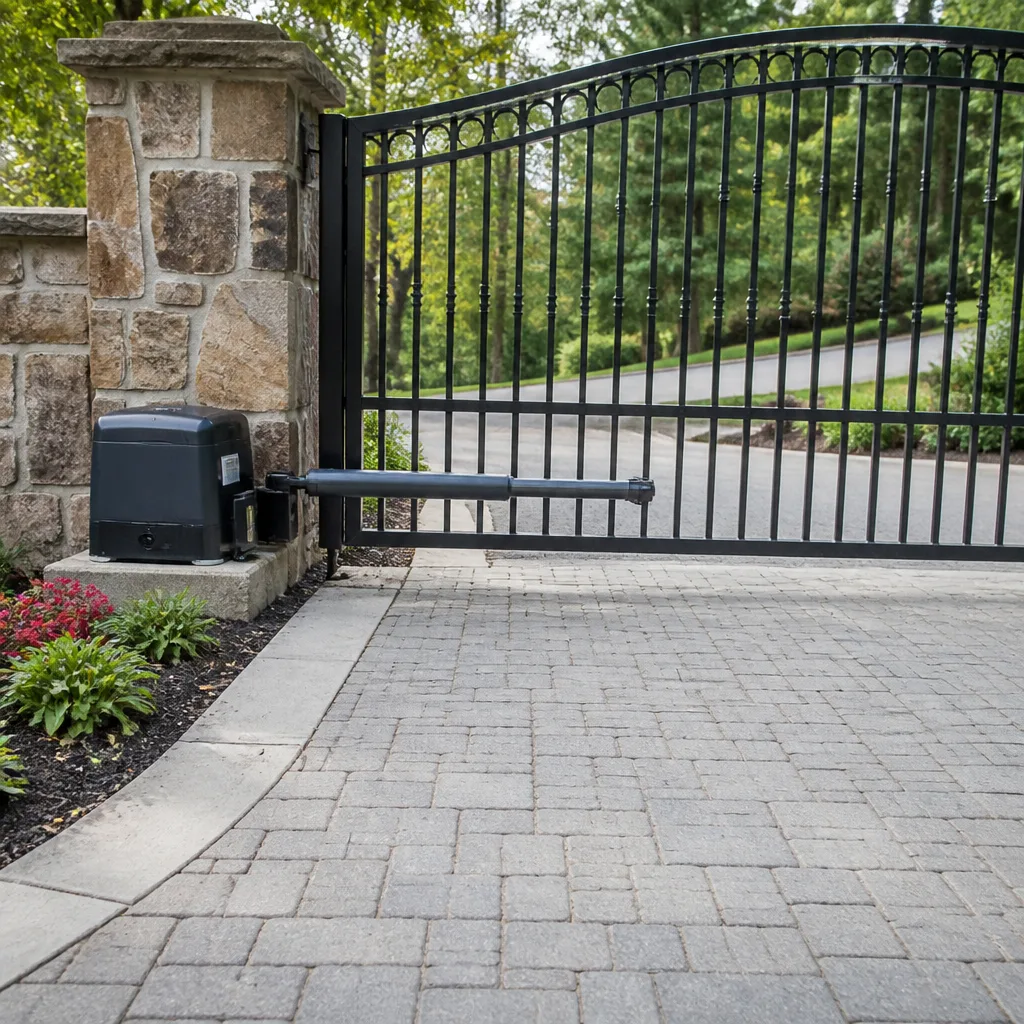
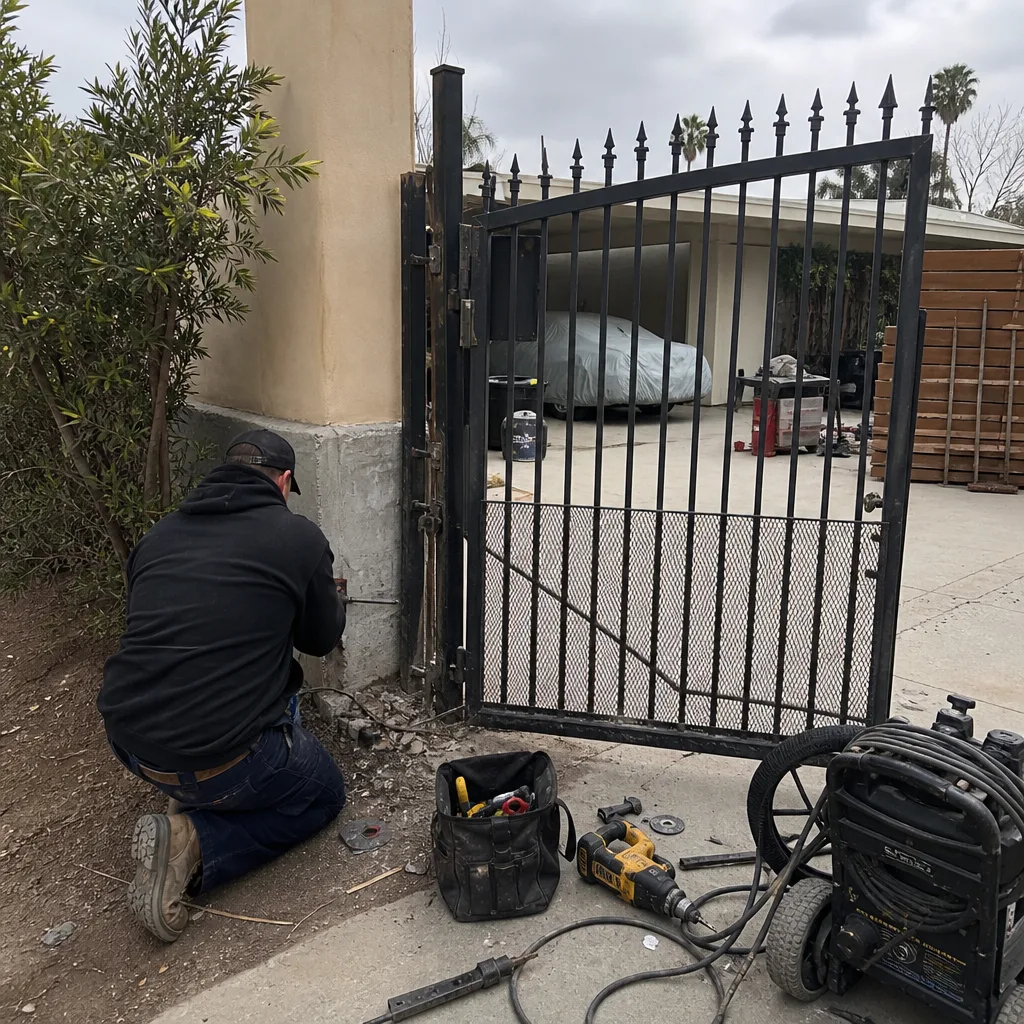 Before
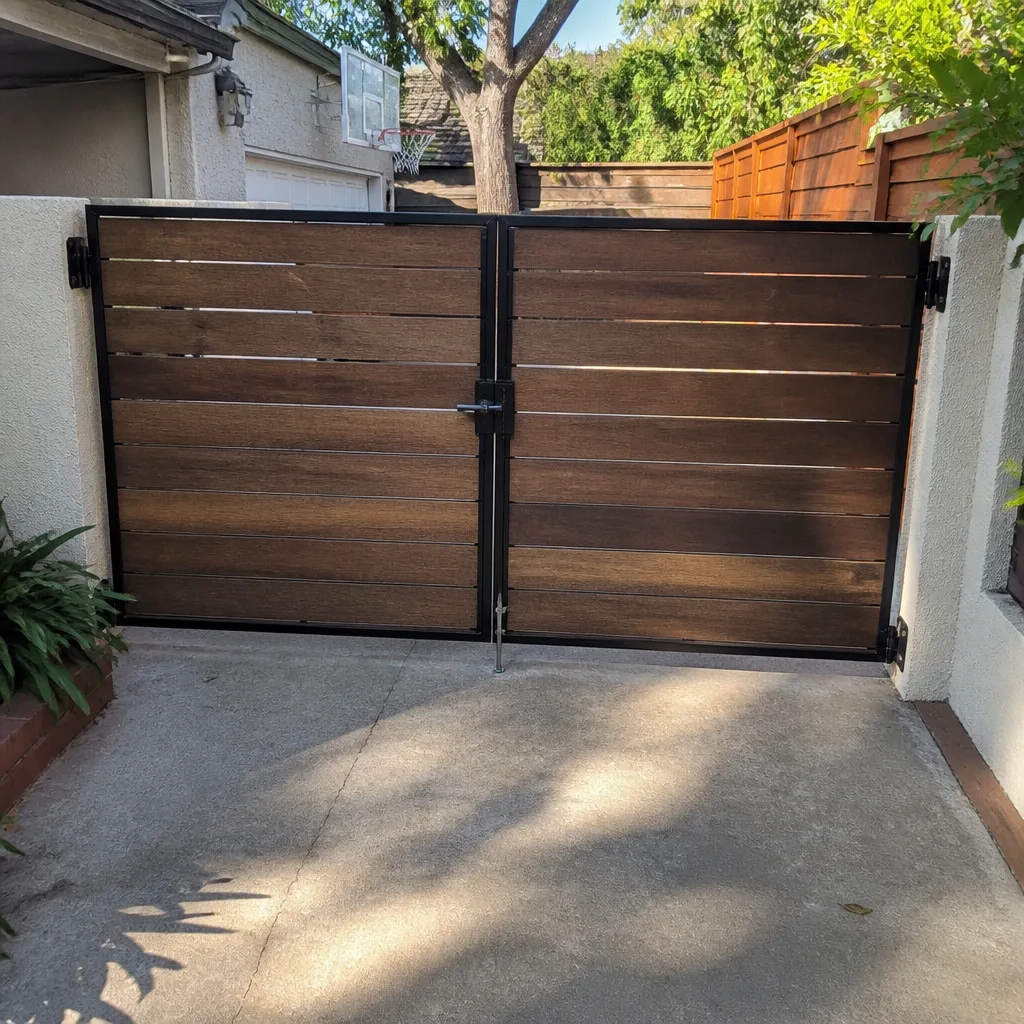 After
After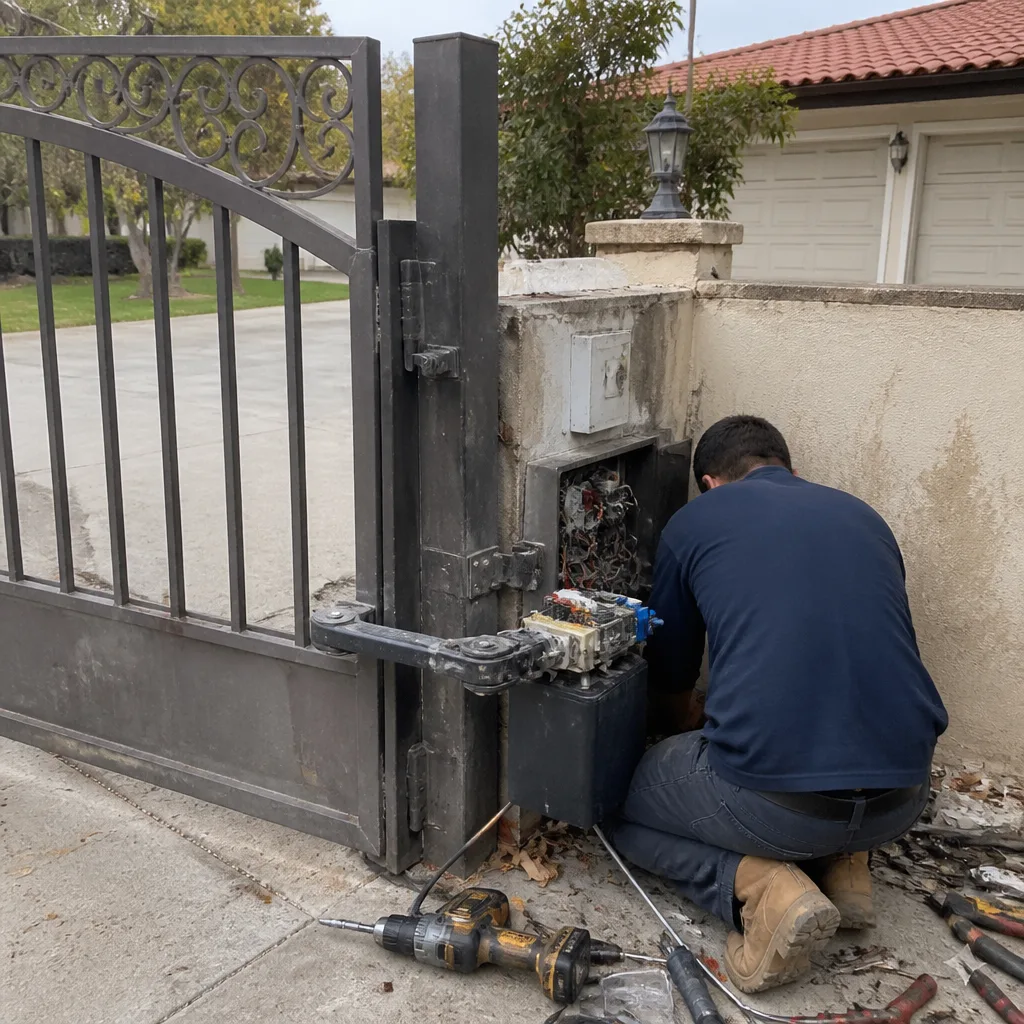 Before
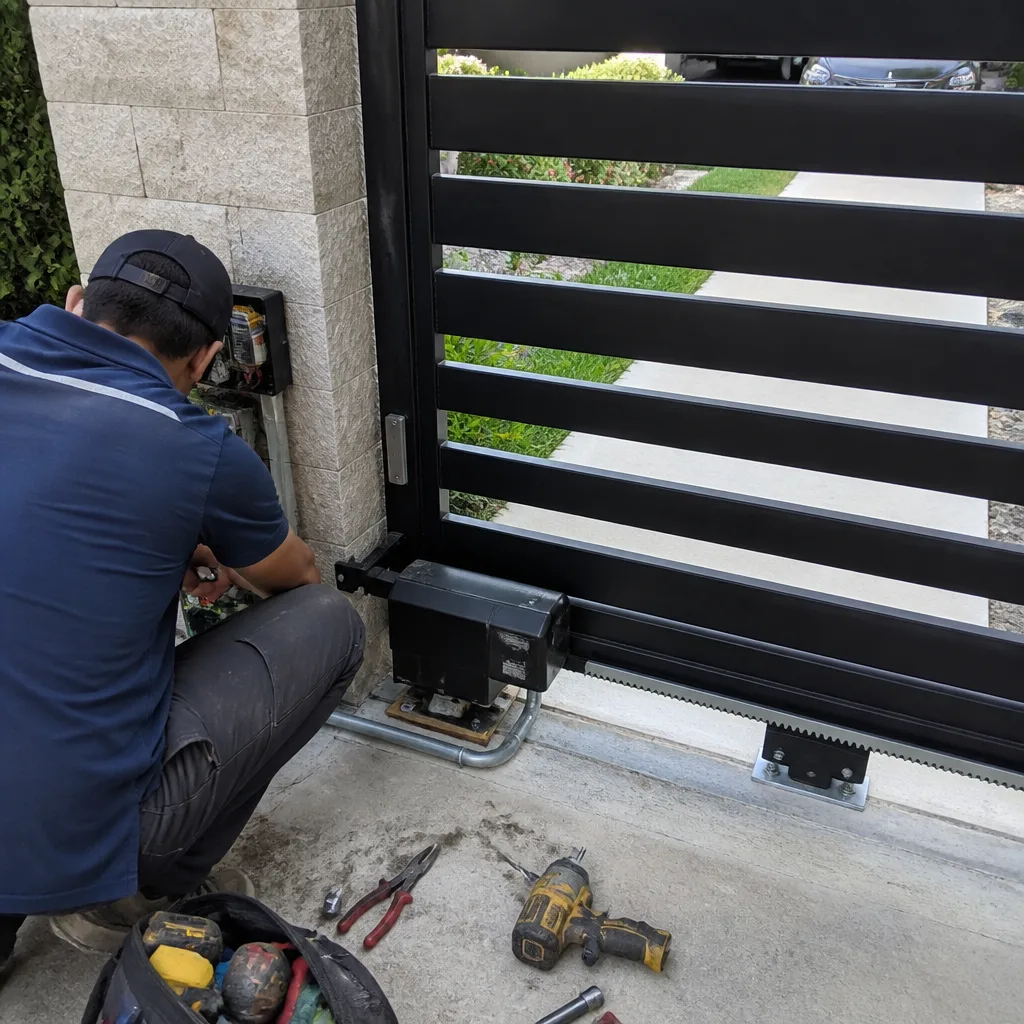 After
After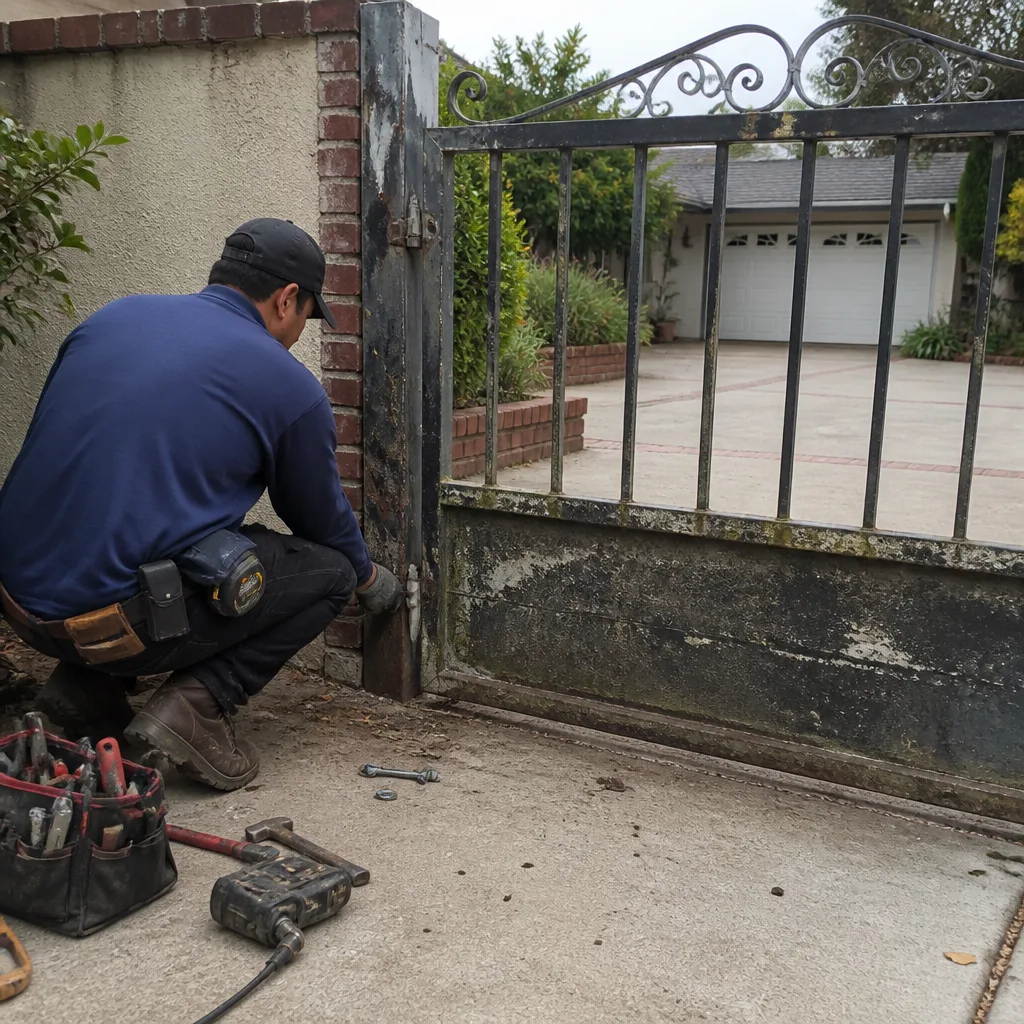 Before
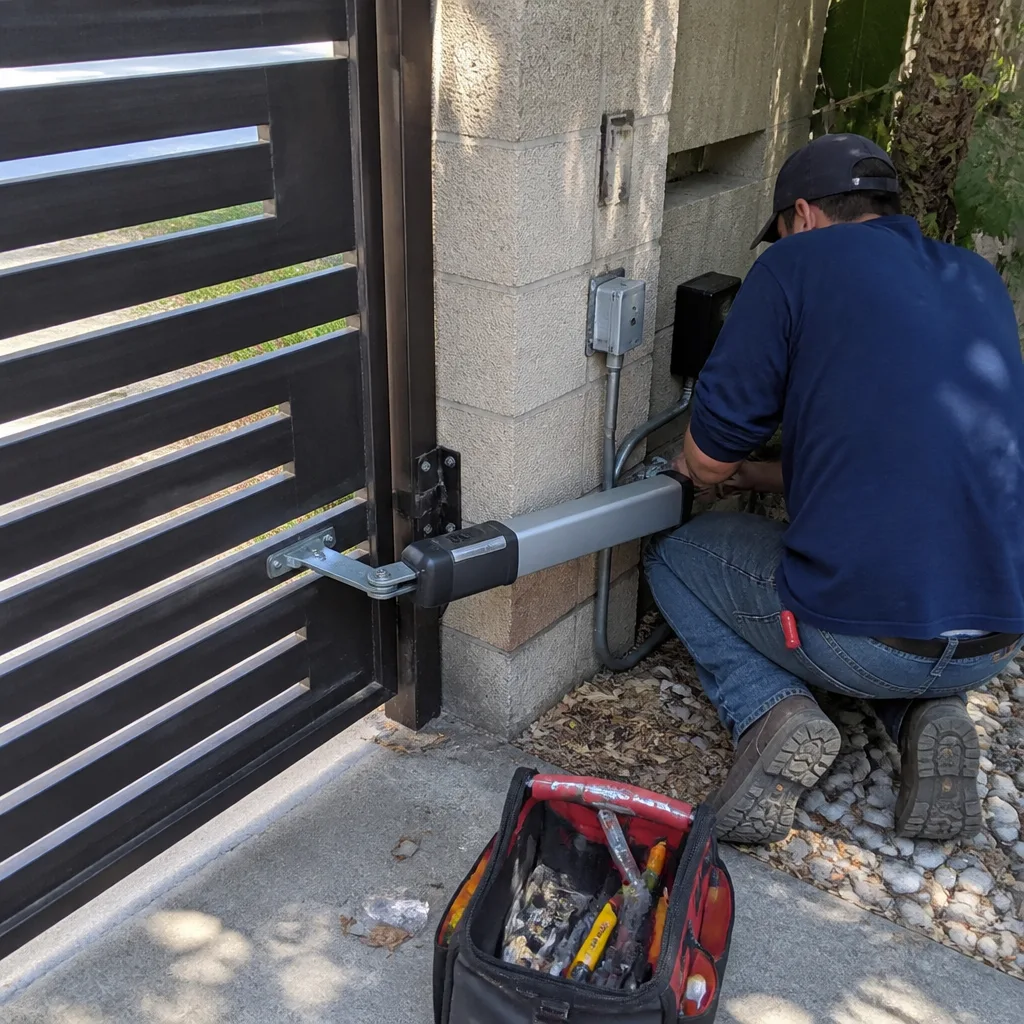 After
AfterGate Repair Permits, Codes & Inspections in CA: What You Need to Know
A homeowner in a hillside neighborhood near Tarzana once had to tear out a brand-new automated gate because the contractor never pulled an electrical permit for the operator. The problem surfaced during escrow, not during the work. The buyer’s inspector flagged it, the seller couldn’t produce paperwork, and a gate that cost $8,400 became a demolition line item. That story is not rare. We hear versions of it monthly, which is why this guide exists: to tell you exactly where the line falls between repair and alteration for residential gate work in the Los Angeles area, what your city and county actually require, and how to avoid holding unpermitted work when you sell.
Quick Answer
Mechanical-only gate repairs (welding a sagging hinge, replacing a bent roller, straightening a post) generally do not require a permit anywhere in California. What triggers permits is automation: adding a gate operator, running new electrical or low-voltage power, or changing the gate structurally. In the City of Los Angeles, any new electrical circuit for a gate motor requires an electrical permit, and in LA County unincorporated areas the same rule applies under the County building code. Like-for-like replacement of an existing operator usually does not require a permit, but the moment you run new conduit or wire, you are in permit territory. HOA approval is a separate layer that exists even when the city says no permit is needed.
Table of Contents
- Repair vs. Alteration: Where the Permit Line Falls
- When Gate Automation Triggers an Electrical Permit
- HOA and CC&R Rules: The Second Permitting Layer
- What Unpermitted Work Means for Your Homeowner’s Insurance
- Owner-Builder vs. Contractor Permits: Why the License Number Matters
- The Inspection Process for Automated Gate Operators
- Safety Codes That Actually Apply: UL 325 and ASTM F2200
- Common Mistakes to Avoid
- When to Call a Professional
- Frequently Asked Questions
Repair vs. Alteration: Where the Permit Line Falls
California building code draws a distinction between maintenance and alteration, and that distinction determines whether you need a permit. A repair restores something to its original condition. An alteration changes it. This sounds simple until you apply it to a gate, where a “repair” can mean welding a cracked weld, replacing a hinge, or swapping a broken gate wheel. None of that requires a permit in Tarzana, Los Angeles, or anywhere else in the state. The gate goes back to doing what it did before, so the code treats it like changing a faucet washer.
An alteration is different. If you cut the gate to change its opening width, change the direction it swings, replace a wooden gate with a steel one on new posts, or add mass to the gate panel itself, the structure has changed. That is an alteration, and many jurisdictions will ask you to pull a building permit. In the City of Los Angeles, structural changes to any gate that weighs more than 150 pounds fall under the same review as any other small structure, because the gate is now outside the original approved design. We have watched inspectors in LA County ask for engineering calcs on a concrete-filled steel post when the post depth wasn’t documented. They ask because a gate that falls on someone is a liability the city shares.
The practical rule we give homeowners is simple: if we are fixing the thing that broke, no permit. If we are changing what the gate is or how it works, ask. A gate sags in the hinge post, not in the middle, and straightening or re-welding that post is repair. Ripping it out and setting a new post is alteration. The difference is not hair-splitting; it’s the difference between a $600 invoice and a $1,900 invoice with an inspection card stapled to it.
When Gate Automation Triggers an Electrical Permit
This is the section that saves people from the Tarzana hillside nightmare described at the top. Any time you run new power to a gate operator, you need an electrical permit. That means new conduit, new wire, a new dedicated circuit from the main panel, or new low-voltage cable trenched from the house to the gate. The permit is required under the California Electrical Code (Article 300 and related sections), which LA County and the City of Los Angeles both adopt with local amendments. The threshold is not the motor’s horsepower or the gate’s weight. The threshold is whether electricity is being installed or extended.
Here is what that looks like in practice:
- Like-for-like operator replacement, same wiring: No permit required. You unbolt a LiftMaster LA400, bolt a new one onto the same pad, reconnect the same four wires, and you’re done. The circuit was permitted when it was installed.
- New operator on an existing gate, but no power was ever run: Permit required. This is the most common scenario we see in Tarzana, where older homes have manual gates and the owner wants automation added. Running power from a subpanel to the gate post is a new circuit, and the City of Los Angeles will want to see it on an electrical permit.
- Upgrading from 110V to 220V or changing the circuit amperage: Permit required. You are modifying an existing circuit, which falls under the same code section as new work.
- Solar-powered operator with no line voltage: No electrical permit required in most cases, but check with your local building department. Some cities in the San Fernando Valley still want the operator installation itself reviewed if the gate is over a certain weight.
We have worked on gates in Encino, Sherman Oaks, and Woodland Hills where the original operator was installed in the 1990s with no permit and no record. That unpermitted past becomes your problem when you try to pull a permit for a new motor today. The city will not let you permit one piece of an unpermitted system. You end up documenting what is there, proving the gate meets current safety standards, and in some cases bringing the whole installation up to code before the new circuit gets signed off. It is easier to know the history before you buy the house, which is why a permit history search should be part of any automated gate purchase.
HOA and CC&R Rules: The Second Permitting Layer
Municipal permits are not the only approval you need. Homeowners associations in the San Fernando Valley often have architectural control rules that govern gates, and those rules exist entirely independent of city code. Your CC&Rs may require HOA board or architectural committee approval even for a like-for-like replacement. That is not because the HOA loves paperwork. It is because the association has a uniform look to protect, and a gate is the most visible hardscape element on your property from the street.
Start with your CC&Rs. Look for sections on fences, walls, gates, exterior alterations, or architectural review. Some HOAs in the Tarzana hills have specific gate standards: maximum height, allowed materials, required setback, even approved finishes. If you replace a wood gate with a steel gate and the CC&Rs say exterior structures must match the original material, the HOA can force you to remove it even though the city never would.
The sequence that works is this:
- Read the CC&Rs yourself. Do not ask your contractor to interpret them; that is not our job and we are not attorneys.
- Submit a written request to the architectural committee or board before scheduling work. Include photos, dimensions, materials, and a description of the operator if the gate will be automated.
- Get the approval in writing. Email counts. Verbal approval does not protect you when the board member who said yes moves away.
- File the municipal permit application only after HOA approval is in hand, since many cities want proof that no other approvals are outstanding.
One nuance: HOAs typically have no authority to waive municipal permits, and cities do not enforce HOA rules. They are two parallel tracks, and you are responsible for both. We have done gate repairs in Tarzana neighborhoods with active HOAs where the fix was purely mechanical and took two hours, no permit needed, but the HOA still wanted a notice because the gate was within view of the street. That is the system working as designed. Frustrating, but predictable.
What Unpermitted Work Means for Your Homeowner’s Insurance
Here is the part most contractors will not tell you, because they are the ones who skipped the permit. If a gate causes an injury and a claim is filed, your insurance company will investigate whether the gate and its operator were permitted and code-compliant. If the answer is no, the insurer may deny the claim. They are within their rights to do so, because most California homeowner’s policies contain a clause requiring the home to comply with building codes, and unpermitted electrical work violates that clause. The denial does not even have to be related to the electrical work itself. The insurer just needs to show that the gate was maintained or modified in a way that violated policy terms.
Consider the timing. An unpermitted operator fails and the gate arm strikes a child walking to school. The homeowner files a liability claim. The adjuster asks for permits. There are none. The claim is referred to the underwriting team. You may not only lose the claim, you may lose the policy, and a non-renewal on your record makes every future quote more expensive.
We have seen this happen twice in the past ten years with gates we were called to inspect after the fact. In both cases the operator had been installed by a handyman who said a permit was “not really necessary.” It costs the homeowner a few hundred dollars more to do it right. The insurance claim would have been worth tens of thousands. This is not a gamble worth taking in Tarzana, where gate operators run daily and the failure mode of a gate that closes on its own is no joke.
Owner-Builder vs. Contractor Permits: Why the License Number Matters
There are two ways a permit gets pulled for your gate: either your licensed contractor pulls it under their own California contractor’s license number, or you pull it yourself as an owner-builder. The distinction matters for liability, and it is one of the most quietly abused corners of residential construction in Los Angeles County.
When a contractor pulls a permit under their license number, that contractor assumes responsibility for the work being code-compliant. The permit is attached to their license. If a problem surfaces later, the Contractors State License Board can investigate, and the contractor’s bond can be used to cover remediation. When you pull an owner-builder permit, you are the contractor in the eyes of the city. You assume the liability. The person doing the work answers to you, and the CSLB has no jurisdiction over them if they are not claiming to be a contractor.
Some contractors push owner-builder permits because doing so keeps the permit history off their license and shifts risk to the homeowner. Some do it because they are not licensed at all and cannot pull a permit under their own number. Either way, you should insist that the permit be pulled under the contractor’s license. A licensed contractor who refuses to do this is telling you something about how they run their business.
To verify what you are signing, look at the permit application before it is filed. The contractor’s license number should appear in the “Contractor” field. If the application lists you as the owner-builder and you did not ask for that, stop the project and ask questions. You can also verify any California contractor’s license on the CSLB website by name, number, or city. If the contractor in front of you has a license number that does not appear on the form they are asking you to sign, something is not right. We work the other way here at Gatewood Fence & Gate home: our license number is printed on every invoice and work order, and we pull permits under our own number because that is what it means to stand behind the work.
The Inspection Process for Automated Gate Operators
If you do need a permit for a new automated gate or a new electrical circuit for an operator, the inspection process in Tarzana and the rest of the City of Los Angeles follows a predictable sequence. Understanding what the inspector is checking will save you a failed inspection and a reinspection fee.
- Rough-in inspection: The inspector comes before the trench is backfilled and before any wire is hidden. They want to see conduit depth (usually 18 inches for PVC under vehicle paths), wire gauge, and the location of the junction boxes.
- Final electrical inspection: After the operator is installed and wired, the inspector verifies the circuit is properly grounded, the disconnect is accessible, and the work matches what was approved on the plans.
- Safety verification: The inspector will run the gate through its opening and closing cycles. They check the entrapment protection: photo eye alignment, reversing edge, and the force settings. The gate must reverse immediately when it encounters resistance. If it does not, you fail.
- UL 325 compliance review: The inspector confirms the operator is listed for the gate’s weight and usage class, and that the installation matches the operator manufacturer’s instructions.
A compliant installation looks like this: the operator is mounted on a properly sized concrete pad, conduit runs are continuous and sealed, photo eyes are mounted no more than 6 inches off the ground at both sides of the gate path, and a separate manual disconnect is accessible near the operator. A shortcut installation looks like the wiring coming up through a gap under the fence, wire nuts wrapped in electrical tape, and no photo eyes at all. We have seen operators in Tarzana installed with extension cords, which is illegal and genuinely dangerous, and we have repaired the aftermath. If your current gate was installed with a cord plugged into an outlet, the best time to fix that is before the next rainstorm.
Safety Codes That Actually Apply: UL 325 and ASTM F2200
You will see two standards referenced in any discussion of automated gate safety, and they are not optional suggestions. UL 325 is the Underwriters Laboratories standard that governs gate operator safety features. ASTM F2200 is the standard for automated vehicular gate construction. Both are incorporated into California law by reference, which means compliance is a legal requirement, not a best practice.
UL 325 exists because gates have killed people. The standard requires two independent means of entrapment protection on every automated gate: a reversing mechanism or reversing edge, and a photo eye or similar monitored sensor. The operator must be labeled with its usage class, and the installer must follow the manufacturer’s instructions exactly. A LiftMaster operator installed without photo eyes is not just unsafe, it is non-compliant, and the installer is exposed to liability even if nothing ever goes wrong. We service LiftMaster, FAAC, BFT, and Linear operators regularly, and the installation manual for every one of them spells out the required safety devices on the page that nobody reads until after the inspection fails.
ASTM F2200 covers the gate itself: the size of openings in the gate panel, the acceptable gap between the gate and the post, and the structural requirements for the frame and hinges. The intent is to prevent a child from slipping through a gap and being caught when the gate moves. The standard applies to gates installed after 2001, which means many older gates in Tarzana predate it and are grandfathered. But the moment you alter an older gate, you may be required to bring it into compliance. We have had to add mesh panels to old iron gates because a homeowner changed the gate’s swing direction and the city required the entire gate to meet current ASTM standards before signing the final inspection.
Common Mistakes to Avoid
- Assuming “repair” means anything short of replacement. Welding a cracked gate is repair. Rebuilding the gate on new posts because the old posts were set without concrete footings is alteration, and in some San Fernando Valley cities it triggers a permit review. If the structure changes, ask before we start.
- Letting the contractor talk you into an owner-builder permit. This shifts liability to you and takes the contractor outside CSLB jurisdiction. Insist the permit is under the contractor’s license or find a contractor who will do that without argument.
- Running power to the gate without checking the code. Buried romex spliced inside a junction box buried in the garden is not legal, not in LA and not anywhere in California. Conduit is required, and the trench has a minimum depth. We have pulled plenty of abandoned romex out of Tarzana flowerbeds.
- Believing the HOA approval is the same as a permit. It is not. HOA approval protects you from fines and forced removal. A permit is a legal record of code compliance. You need both when both apply.
- Skipping the photo eyes on an operator install. Some homeowners think the photo eyes ruin the look of the gate. The inspector does not care about the look. The gate will fail final inspection every time, and entrapment protection is not optional for a reason.
- Thinking a portable solar panel strapped to the gate post eliminates the electrical permit. If the system connects to any wiring that enters your house or garage, the electrical code still applies. Truly standalone solar is one thing; running a line to power the receiver is another.
- Not checking permit status before buying a home with an automated gate. The previous owner’s shortcut becomes your problem. Pulling the permit history at the building department costs a few dollars and an afternoon. Remediating unpermitted work after escrow closes costs thousands.
When to Call a Professional
Some jobs are DIY-friendly. Adjusting the chain tension on a MANUAL gate, greasing hinges, tightening bolts: go ahead. The moment electricity enters the picture, or the gate is heavy enough to crush a car, stop and call someone who does this every day. Specific scenarios that warrant a professional: installing a new gate operator, running any new wiring or conduit, modifying a gate frame, repairing a gate that has come off its track, and any repair on a gate over 250 pounds with tensioned components. A gate that closes on its own will not warn you before it does, and the person standing in its path will not have time to move. We have been doing this work in Tarzana since 2001, and we fix gates in driveways, not in a shop. Gatewood Fence & Gate offers free estimates in Tarzana, call (818) 514-7606. We will tell you honestly whether your project needs a permit, because we would rather be the contractor who told you straight than the one who left you with a surprise at resale.
Frequently Asked Questions
No, mechanical repairs to an existing gate like welding, hinge replacement, or roller repair do not require a permit anywhere in California, including Tarzana. A permit becomes necessary when you alter the gate’s structure or add new electrical components. If you are unsure whether your project crosses that line, call (818) 514-7606 and we will tell you straight.
An electrical permit for a new gate operator circuit typically runs between $150 and $400 depending on the circuit’s amperage and the number of inspections required, and a building permit for a structural gate alteration can run several hundred dollars more. The exact fee depends on the project valuation and current LADBS fee schedule. The permit is cheap compared to remediating unpermitted work at resale.
Legally, yes. As the property owner, you can pull an owner-builder permit and perform the work yourself, assuming you can demonstrate the installation meets UL 325 and all electrical code requirements. But consider what you are signing up for: you assume liability for the work, and if the gate injures someone, your defense is an inspection by a city that does not certify safety. Most homeowners in Tarzana who start this project end up calling us to fix the installation after the first rain.
The unpermitted work will surface during the buyer’s inspection, as it did in the Tarzana hillside case described at the top of this guide. Depending on what is unpermitted, you may need to pull a retroactive permit, bring the installation up to code, or remove the work entirely. You can avoid the surprise by pulling a permit history report from LADBS before you list the house, and if the news is bad, a qualified gate contractor can often bring the install into compliance for less than the sellers feared. Gate Installation in Tarzana includes permit navigation for exactly this scenario.
In most HOAs with architectural review rules, pure repairs do not require approval, but any change to appearance, materials, height, or automation does. Read your CC&Rs before you schedule the work, and get approval in writing even if you think the change is minor. We have watched a Tarzana homeowner repaint a gate black and get a cease-and-desist from the architectural committee the same week.
Yes. Every automated vehicular gate installed since 2001 must meet ASTM F2200 and UL 325, which together require entrapment protection including photo eyes or an equivalent monitored device. If your operator lacks entrapment protection, it is illegal to operate in California, and it is a liability waiting to become a lawsuit. Gate Motor & Opener in Tarzana covers the safety retrofits we do most often.
The Bottom Line
California’s gate permitting rules confuse people because they are genuinely inconsistent: a mechanical repair needs no permit, a new electrical circuit does, and your HOA may impose requirements the city never will. The practical approach is to know what kind of work you are doing, check both the municipal and HOA tracks, and pull permits under the contractor’s license, not your own. Unpermitted work does not disappear; it waits until escrow opens or a claim is filed. In Tarzana, where gates run on hilly driveways and hillside lots, the cost of doing it right is always less than the cost of explaining why it was not. Gate Repair in Tarzana starts with an honest assessment of what your gate needs and whether a permit is part of it. Call (818) 514-7606 and we will give you an answer you can count on.
Written by Hal Gatewood, Owner at Gatewood Fence & Gate, serving Tarzana since 2001.