
Last updated August 26, 2026
Free on-site gate assessment - hinges, posts, and your LiftMaster or Nice gate operator checked before anything is quoted
The assessment is free and the quote is the invoice.
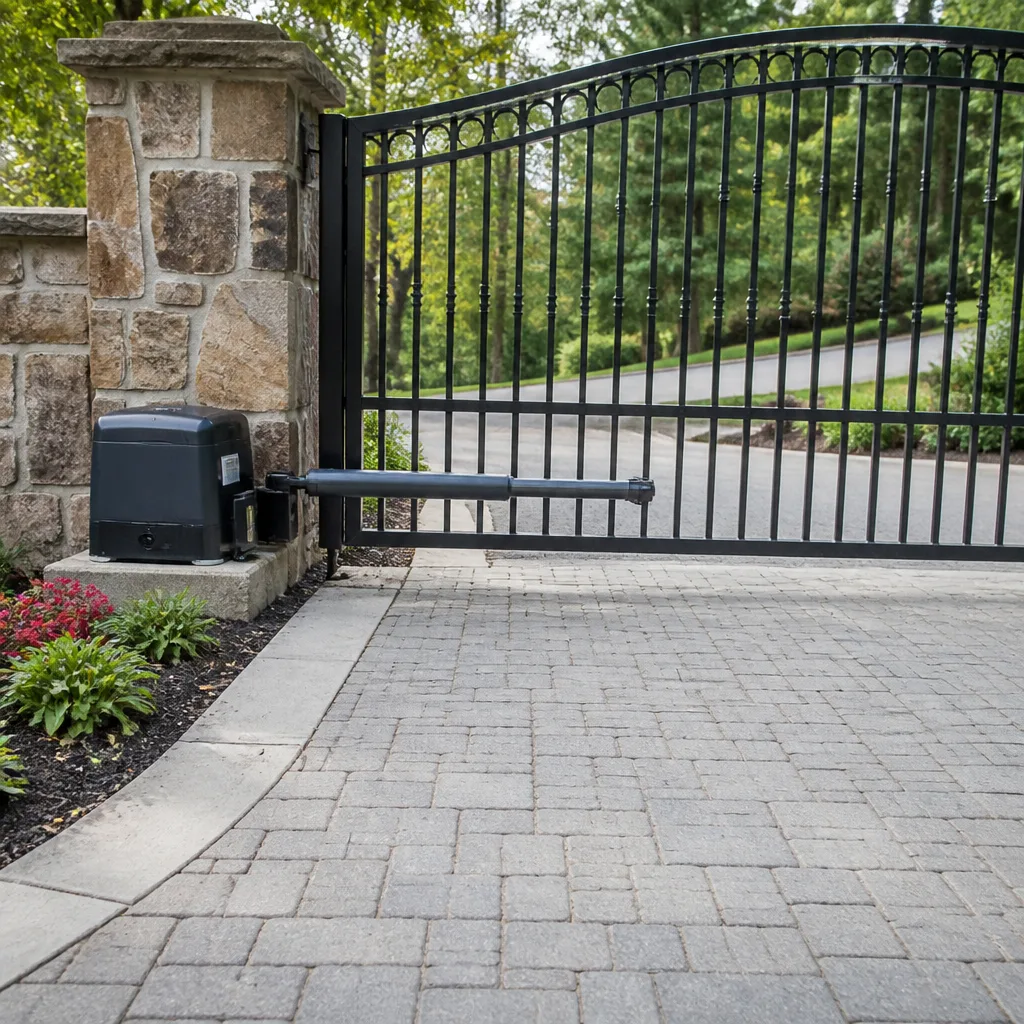
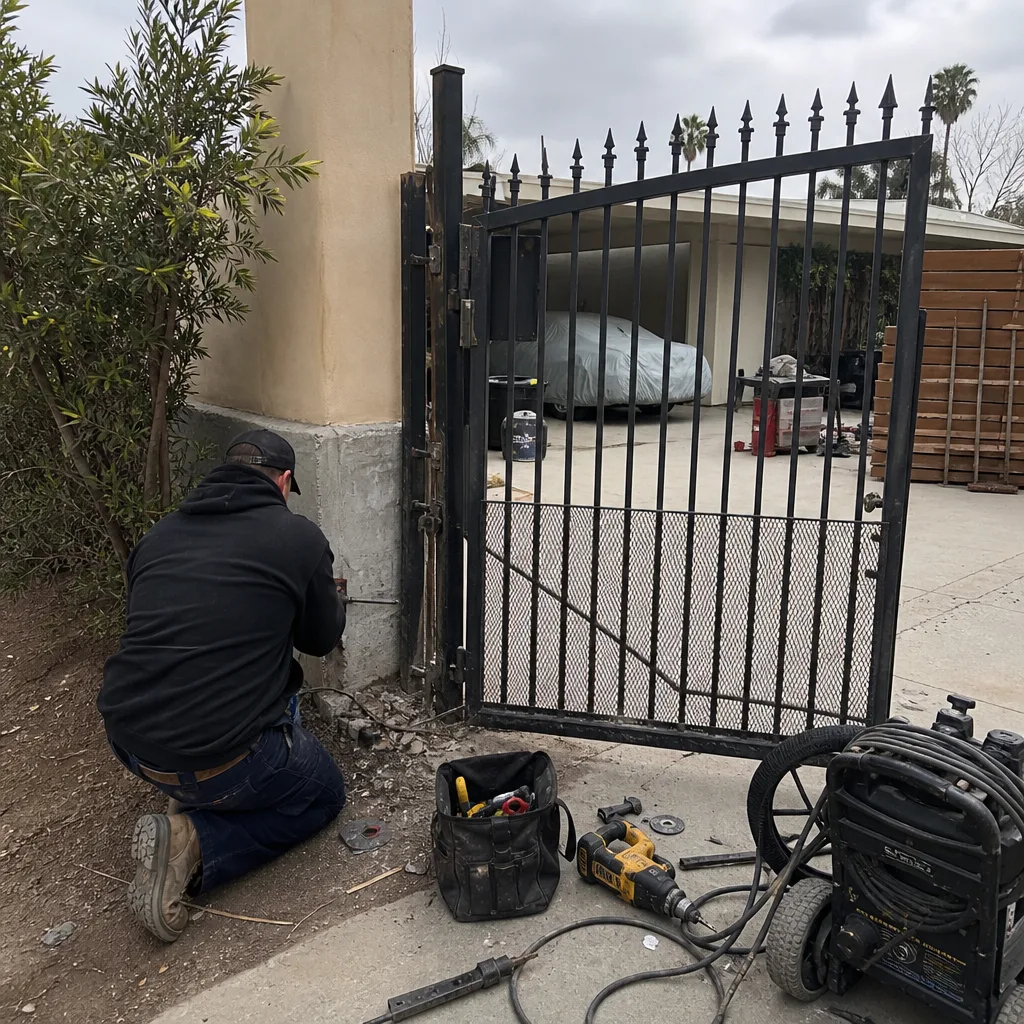 Before
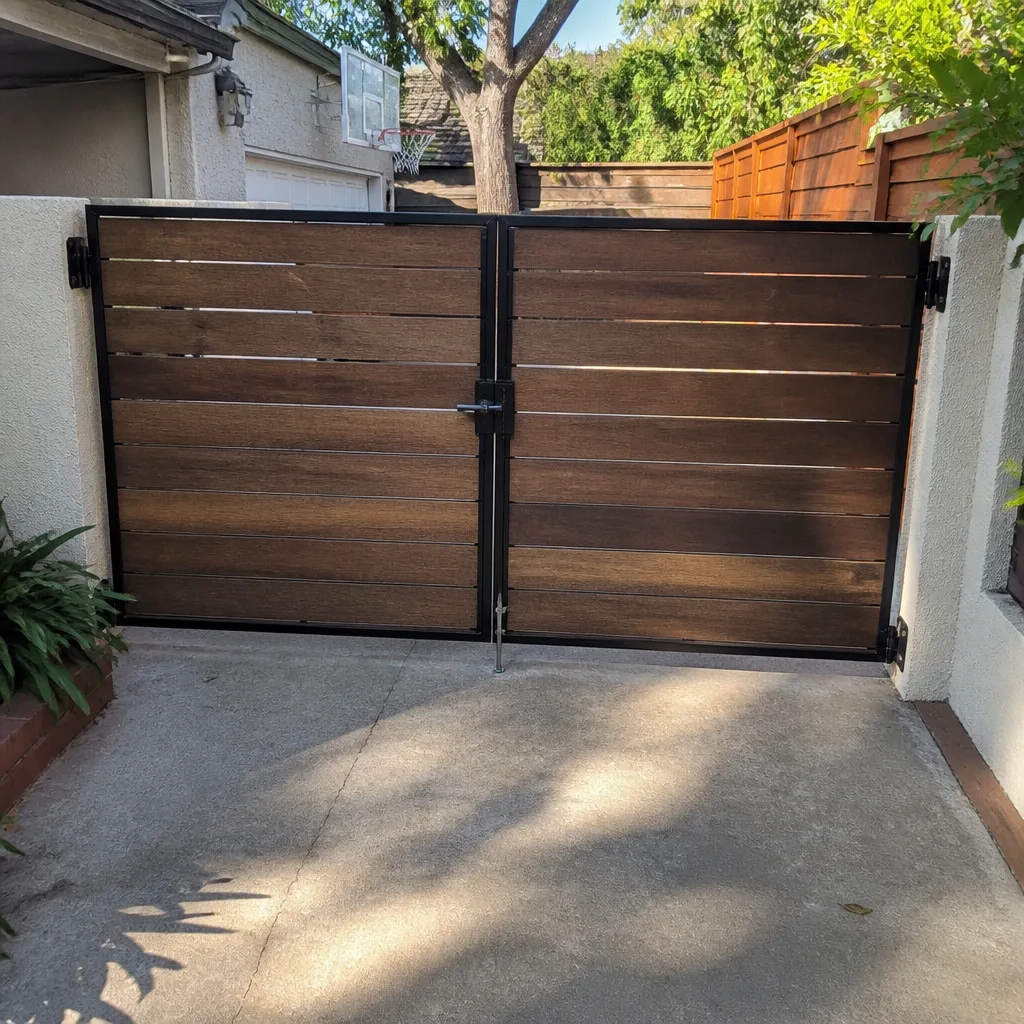 After
After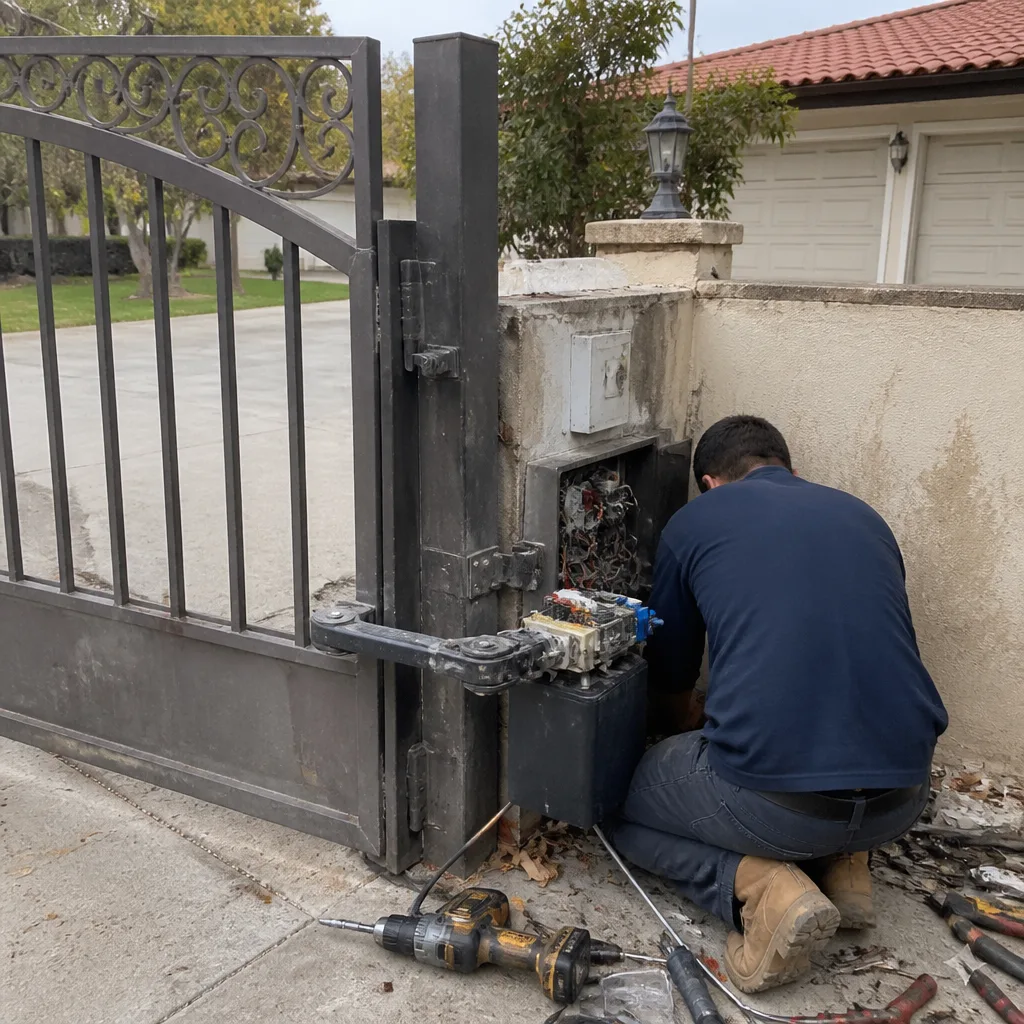 Before
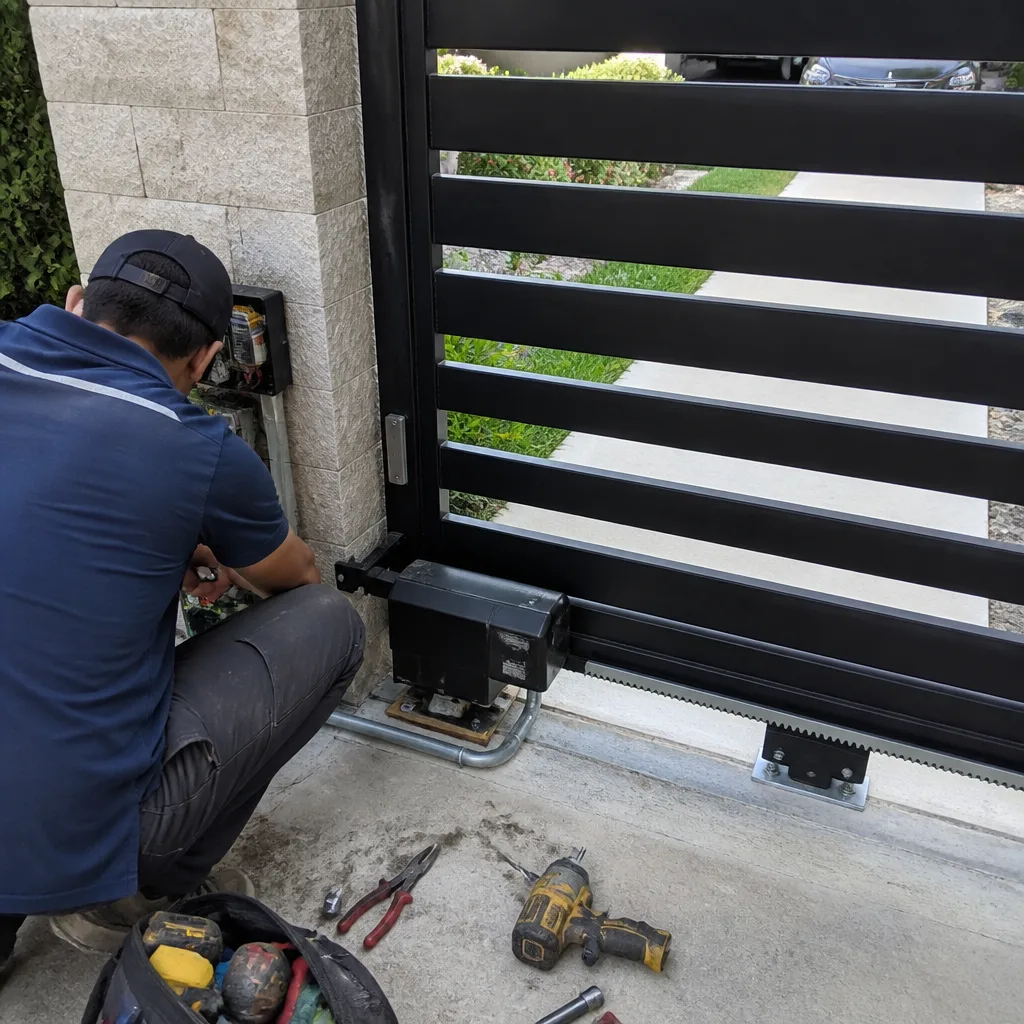 After
After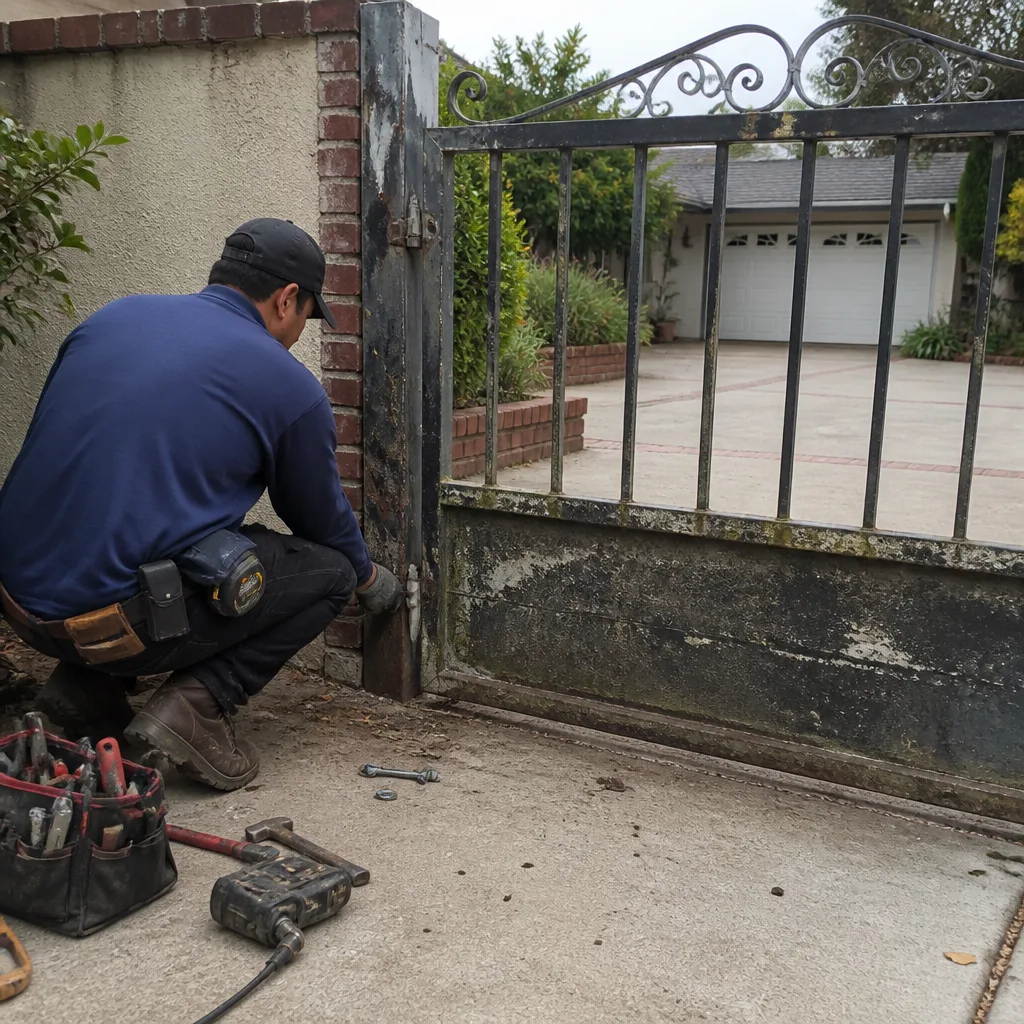 Before
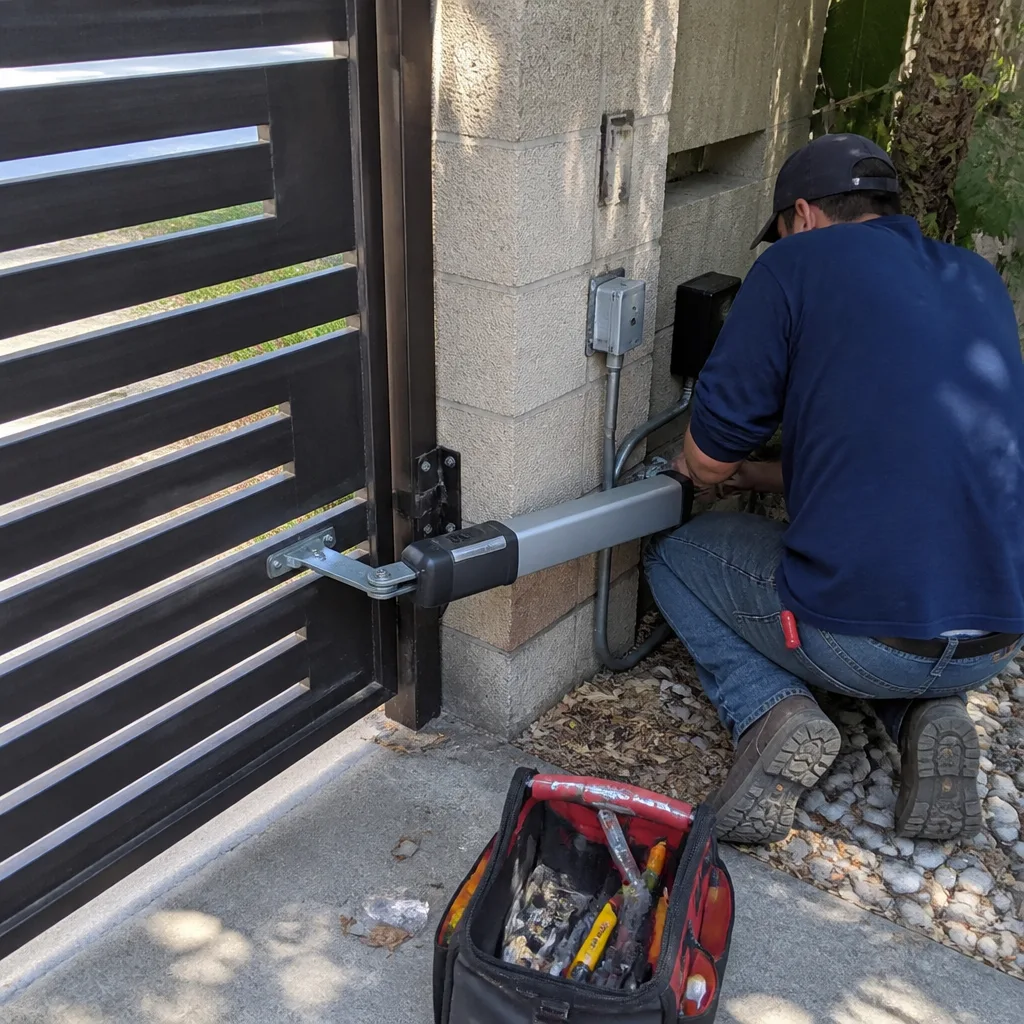 After
AfterDIY vs Professional Gate Repair: The Tarzana Homeowner’s Decision Guide
Here’s a number that shocks most Tarzana homeowners: roughly four out of every ten gate repairs we walk into started as a weekend DIY project that went sideways. Not because the homeowner was careless. Because gate hardware hides its failure points. A bolt that looks fine from the outside has sheared threads inside the post. A limit switch that clicks sounds identical to one that’s about to burn out a $600 motor. Hal will tell you straight: there are gate repairs he’d do himself on a Saturday if it were his house, and there are repairs where he wouldn’t let his own kids touch the hardware. The line between them is not where most people think it is. This guide draws that line honestly, without talking you out of legitimate DIY work or into Gate Repair services that could hurt you or wreck your gate.
Quick Answer
Most gate repairs in Tarzana fall into three buckets: genuinely safe DIY jobs (lubrication, latch adjustment, surface rust treatment, minor shimming), repairs that look simple but hide expensive failure modes (hinge bolts on heavy gates, limit switch adjustments, anything near structural welds), and one category that is never a DIY job: high-tension torsion springs and spring-counterbalanced systems. If your gate is under about 150 pounds, manually operated, and the problem is visible on the surface, a careful homeowner can handle it. Anything heavier, automated, or involving springs and load-bearing hardware belongs in professional hands. The cost of fixing a botched DIY repair typically runs two to three times what the original professional fix would have cost.
Table of Contents
- The Repairs You Can Genuinely Do Yourself
- The DIY Jobs That Hide Expensive Failure Modes
- The One Category That Is Never DIY: Torsion Springs
- How to Honestly Assess Your Gate Before You Decide
- Automation Complexity: When the Motor Changes the Math
- What a Botched DIY Repair Actually Costs in Tarzana
- Tarzana-Specific Factors That Shift the Decision
- Common Mistakes to Avoid
- When to Call a Professional
- Frequently Asked Questions
- The Bottom Line
The Repairs You Can Genuinely Do Yourself
Let’s start with the honest good news. Some gate maintenance is not only safe for a competent homeowner, it’s work that should be done regularly, and paying someone to do it every time would be like paying a mechanic to check your tire pressure. For Gate Repair Maintenance Checklist for Tarzana Homeowners, see our detailed guide. In Tarzana’s dry, dusty climate, these maintenance tasks matter more than in coastal areas, because grit and heat accelerate wear on moving gate hardware.
Lubrication: The Twenty-Minute Job That Prevents Most Wear
Lubrication is the single highest-value DIY task on any gate, manual or automated. Here’s the specific, non-generic version of what to do:
- Use a dry lubricant with PTFE or a white lithium grease. In Tarzana’s dusty air, wet oils like WD-40 are a mistake: they attract grit and turn into grinding paste within weeks.
- Lubricate the hinge pins, the latch mechanism, and every moving pivot point you can see. If your gate has an operator arm, lubricate the arm’s pivot joints too.
- Do this every six months. In Tarzana, the hot dry summers and occasional Santa Ana winds mean dust works its way into hinges faster than in coastal neighborhoods. Twice a year is not overkill.
- Wipe off excess. A thin film is correct. Globs collect dust.
In our experience servicing gates across Tarzana and the surrounding valley, a gate that gets lubricated twice a year will often outlast a neglected gate by double its normal service life, regardless of brand. This is the most underrated maintenance task on the property.
Latch Adjustment and Minor Alignment Shimming
If your gate’s latch doesn’t catch cleanly, or the gate rubs against the post by a quarter inch, these are often legitimate DIY fixes. The gate settles. The post settles. Tarzana’s expansive clay soil, which swells in winter rain and contracts in summer heat, is a common culprit for shifting posts and changing tolerances.
For a latch that doesn’t catch: loosen the latch plate, adjust it up or down by an eighth of an inch, retighten, and test. For a gate that rubs: a thin galvanized shim behind the hinge plate can correct minor alignment drift. Both adjustments take a wrench and thirty minutes. Neither carries meaningful risk if done carefully.
Surface Rust Treatment on Steel Gates
Tarzana’s climate is relatively kind on steel compared to coastal areas, but any scratch or chip in the paint invites rust, and rust expands and accelerates failure. A homeowner can absolutely handle surface rust:
- Wire-brush the rusted area down to bare metal.
- Apply a rust converter or rust-inhibiting primer. Do this on the same day; exposed steel in Tarzana’s occasional damp winter mornings will start to oxidize within a week.
- Paint with a matching rust-inhibiting top coat.
This is genuine preventive work. It keeps a gate structurally sound for years longer than ignoring scratches. But note the word “surface.” The moment rust has pitted the metal deeply, or the rust is at a weld joint, steel integrity is compromised, and it stops being a paint job. That’s a Gate Repair in Tarzana situation, because welding and structural reinforcement are not paint.
Here’s the honest rule we give homeowners: if you can see the problem and understand why it’s happening, and the parts involved don’t bear the gate’s weight or tension, it’s likely a safe DIY job. The list is short, and it ends roughly there.
The DIY Jobs That Hide Expensive Failure Modes
This is where the DIY-versus-professional line gets interesting, and where most homeowners get hurt financially. Not physically, yet, but in repair costs that dwarf what the original professional fix would have run. These are repairs that look and feel like straightforward hardware swaps, but carry hidden failure modes a homeowner won’t see until the gate fails catastrophically.
Hinge Bolt Replacement on Heavy Gates
Show me a gate sagging at the latch end, and I’ll show you where the hinge post is failing. That’s the general rule. But some homeowners see loose or rusted hinge bolts and think: I’ll just swap in new bolts. It looks like a twenty-minute job. Here’s what they don’t see.
On any gate over about 150 pounds, hinge bolts carry constant shear load. The threads inside the post strip over time. The bolt looks okay from the outside, but its thread engagement is reduced. When you put in a new bolt, especially a generic hardware-store bolt that’s not the same grade, same diameter, or same thread pitch, two things happen. First, the new bolt doesn’t bite deeply enough to hold the gate’s weight. Second, you’ve just introduced a bolt with different metallurgical properties into a load-bearing connection. Give it three months of Tarzana’s daily heat-cool cycles, and the gate sags again, only this time the post threads are further damaged and the repair is now a weld-in-place or post-replacement job.
Professional hinge repair on a heavy gate means assessing the post, the threads, the bolt grade, and often re-drilling and tapping or welding reinforcing plates. The bolt is the last thing we touch, not the first. This is why we tell Tarzana homeowners: if your gate is heavy enough that you can’t lift it off its hinges alone, hinge work is professional work.
Limit Switch Adjustment on Automated Operators
This one burns out motors. A limit switch tells the operator where the open and closed positions are. It looks like a small adjustment screw or a pair of switches. The temptation to “just tweak it a little” when the gate doesn’t close all the way is enormous.
Here’s the hidden failure mode. If you adjust the limit switch too tight, the operator keeps pushing after the gate hits its stop. That continuous push strains the motor every cycle, and overheating is not an if, it’s a when. On a LiftMaster or FAAC operator, a burned motor is a $400 to $800 repair, and it often takes the control board with it. If you adjust the limit switch too loose, the gate doesn’t seal, the lock doesn’t engage if you have one, and you’re back to square one. And here’s the part nobody mentions: limit switches interact with the force settings and the safety reverse. Change one without checking the others, and you’ve got a gate that could close against an obstruction without stopping.
We service nine major gate automation brands, including LiftMaster, FAAC, BFT, and Linear, and we’ve seen this exact sequence play out dozens of times in Tarzana driveways. The homeowner’s $10 adjustment becomes a $600 motor replacement. The original professional adjustment would have been under a hundred.
Any Work Near Structural Weld Points
A gate sags in the hinge post, not in the middle, and that is where we start. The welds where the hinge brackets meet the post, and where the vertical rails meet the horizontal rails, are the load-bearing joints of the entire gate structure. When a homeowner sees a crack near a weld and decides to drill a few bolts or add a bracket, they’re redistributing stress in ways the gate was never designed for.
Fix the panel without the post and you’ll fix it twice. A gate’s structure is a system. The panel loads the hinges, the hinges load the post, the post loads the footing. When you reinforce one point without understanding the load path, you move the stress to the next-weakest point, which was not designed to take it. The failure doesn’t disappear; it relocates.
In Tarzana, we see this most often with older wrought-iron gates and chain-link gates from the 1970s and 1980s, when many homes in this area were built. The original steel was often thinner than modern stock. Weld repairs on these gates require knowing the original material thickness, the current state of oxidization, and how to weld thin stock without burning through. That’s not a Saturday job.
The One Category That Is Never DIY: Torsion Springs
Let’s be completely clear about this section, because there’s liability boilerplate out there and then there’s the actual truth. High-tension torsion springs on spring-counterbalanced gate systems are the gate-world equivalent of garage door springs. They are under enough stored tension to remove fingers, break bones, or worse if the spring lets go while you’re working on it. This is not a cautious recommendation. It’s a line that does not move.
Torsion springs on gates work by storing the gate’s weight energy in wound spring steel. When the gate closes, the spring winds and stores tension. When the gate opens, the spring unwinds and releases that energy to assist the opening motion. The spring is always carrying load, even when the gate is at rest. If a spring breaks while a person is adjusting it, the release of stored energy can send steel fragments or tools flying at speeds that cause serious injury.
Here’s what we tell homeowners in Tarzana: if your gate has a torsion spring system, and the spring is broken, sagging, or making pinging sounds, close the gate if you can do so safely, keep people and pets away from the gate’s travel path, and call a professional. Do not attempt to wind, unwind, replace, or “just look at” a torsion spring. The spring looks like a passive coil of metal. It is not. It is a loaded weapon.
We’ve been in this trade since 2001, and we still treat every torsion spring job with the same respect we treated them on day one. Any professional who tells you torsion spring work is routine should not be on your property. The injury risk is real, and the property damage risk is real too: a gate that lets go mid-cycle can swing hard enough to damage vehicles, fences, or the gate’s own frame.
This is a good place to say it plainly: some things are worth paying for because the alternative is not saving money, it’s gambling with fingers and faces. Torsion springs are that category, full stop.
How to Honestly Assess Your Gate Before You Decide
The best way to make the DIY-versus-professional decision is to answer four questions honestly, before you touch any hardware. We use these same questions when a Tarzana homeowner calls and asks, “Should I try this myself?”
Question 1: How Much Does the Gate Weigh?
This is the single most important variable, and the one nobody measures. Walk to your gate and try to lift it slightly at the latch end. If you can lift it easily, it’s a light gate, under about 150 pounds. If it barely moves or doesn’t move without significant effort, it’s a heavy gate.
- Under 150 pounds: Manual gates in this range are generally safe for the DIY tasks listed above: lubrication, latch adjustment, surface rust, minor shimming.
- 150 to 300 pounds: This is the gray zone. Hinge hardware, post connections, and alignment issues are now professional territory. Surface maintenance is still DIY-safe.
- Over 300 pounds: This is heavy iron, wood, or composite territory. Any structural, hinge, or post work is professional. Do not do hinge work on a 400-pound iron gate. The gate will win.
In Tarzana’s older neighborhoods, you’ll find plenty of original wrought-iron gates from the 1960s and 1970s that weigh well over 300 pounds. These gates were overbuilt in ways modern gates are not, and they demand respect.
Question 2: Is the Gate Automated?
If there’s an operator arm or a motor on the gate, you’ve added a layer of complexity that changes the risk math. Automated gates have force settings, safety reverse mechanisms, limit switches, and electrical wiring. Every one of those subsystems can turn a simple mechanical fix into an electrical or programming problem. In most cases, the presence of automation pushes even borderline DIY jobs into professional territory. We’ll get into this more in the next section.
Question 3: What Is the Post Made Of, and How Solid Is It?
Gate posts in Tarzana are typically steel, wood, or masonry. Each has different failure modes. Steel posts rust from the inside where you can’t see it. Wood posts rot at the ground line, especially in Tarzana’s winter rain followed by summer heat. Masonry posts crack at mortar joints, especially when the wall was built without proper rebar. If the post is compromised, any DIY work on the gate itself is temporary at best. The post is the foundation, and foundation work is professional work.
Question 4: Can You Clearly See and Understand the Problem?
This is the honest gut-check question. If you look at the gate and you can say, “The latch plate has slipped down, here’s the scratch mark, here’s where it used to sit,” that’s a visible, understandable problem. If you look at the gate and your honest answer is, “It’s making a noise, and I’m not sure where it’s coming from, and the gate seems to hang lower on one side but I can’t tell why,” that’s a diagnostic problem. Diagnostic problems are professional problems. In our experience, the moment you have to guess what’s wrong, you’re about to spend money on parts that don’t fix it.
Automation Complexity: When the Motor Changes the Math
The presence of an automated operator fundamentally changes the DIY calculus, and not for the reason most people think. It’s not that the motor is complicated. It’s that the motor is connected to everything else, and adjusting one thing without understanding the whole system creates cascading failures.
An automated gate operator, whether it’s a LiftMaster, FAAC, BFT, or Linear unit, has at minimum these interacting components:
- Limit switches that tell the operator where open and closed are.
- Force settings that control how hard the operator pushes before it reverses.
- Safety reverse that detects obstructions and reverses direction.
- Control board that coordinates everything.
- Gear mechanism or hydraulic drive that does the physical work.
Each component affects the others. Change the limit switch, and the force setting may now be wrong. Change the force setting without recalibrating the safety reverse, and the gate may not reverse when a child or dog is in the path. This is the part that DIY videos don’t mention: the safety systems are not decorative. They exist because prior generations of automated gates killed and injured people. Modern operators are safe when calibrated correctly and dangerous when they’re not.
Here’s a specific Tarzana-relevant fact: many homes in this area have automated driveway gates installed on slopes or uneven terrain. A gate on a slope puts asymmetric load on the operator. The operator has to work harder in one direction than the other. If a homeowner partially disables or miscalibrates the safety reverse to compensate for a gate that’s struggling on a slope, the result is a gate that still struggles and now won’t reverse when it should.
Our general rule for automation: if the operator is misbehaving, and you’ve already verified the basics (power is on, remote battery is good, nothing is physically blocking the gate), stop there. The next step is a Gate Motor & Opener in Tarzana service call, not a screwdriver. The diagnostic equipment and brand-specific knowledge required to properly service these units is not something you can improvise from a video. We’re certified on nine major brands, and even with that training, each brand has quirks that only show up in the field.
The practical threshold: if your gate is automated and the problem is mechanical (the gate physically moves poorly), it might still be safe to do basic lubrication yourself. If the problem is electrical, programming, safety-system, or motor-related, that’s professional. The electrical wiring, the force calibration, the limit settings, and the safety reverse are not DIY-accessible.
What a Botched DIY Repair Actually Costs in Tarzana
For a Gate Repair Cost Breakdown: The Tarzana Homeowner’s Reference for 2026, here’s the real-world comparison built from repairs we’ve done on gates where a previous DIY attempt went wrong. These are the actual cost patterns we’ve seen across Tarzana and the surrounding San Fernando Valley over the years.
Scenario 1: The Hinge Bolt That Became a Post Replacement
A homeowner noticed a sagging gate and replaced two hinge bolts with hardware-store bolts. The bolts were the wrong grade. Three months later, the gate sagged worse. The threads in the post were stripped. The original professional repair, which would have been hinge reinforcement and correct-grade bolts, would have cost roughly $250 to $400. The eventual repair, which required cutting out the damaged post section, welding in a new steel sleeve, and repainting, cost $1,400. The DIY attempt saved $250 and cost $1,150 in additional repair.
Scenario 2: The Limit Switch That Became a Motor Replacement
A homeowner adjusted the limit switch on a LiftMaster operator because the gate wasn’t closing all the way. The adjustment was too tight. Over about six weeks, the motor overheated during every cycle until it failed, taking the control board with it. The professional limit switch adjustment and force recalibration would have cost about $120. The motor and board replacement cost $780. The DIY attempt saved $120 and cost $660.
Scenario 3: The Weld Reinforcement That Split the Panel
A homeowner drilled a bolt-on bracket into a cracked weld joint on a steel gate. The bracket concentrated stress at a point the gate wasn’t designed to bear. Within two months, the panel cracked along a new line, six inches from the original crack. The professional weld repair would have been about $180. The eventual repair, which involved cutting out the damaged section, welding a new steel plate across the entire joint, and refinishing, cost $520. The DIY attempt saved $180 and cost $340.
The pattern is consistent: botched DIY gate repairs cost two to three times what the original professional repair would have cost. For more guides & resources on keeping your gate in top shape, explore our blog. And that’s before factoring in the time, the frustration, and the period when the gate wasn’t working properly.
We’re not bringing this up as a scare tactic. The numbers are what they are. We bring them up because Tarzana homeowners deserve to make this decision with real facts, not with internet optimism.
Tarzana-Specific Factors That Shift the Decision
Tarzana has some specific characteristics that affect gate longevity and repair decisions, and they’re worth knowing before you decide whether to tackle a repair yourself.
Expansive Soil and Post Settlement
Tarzana sits on the valley’s expansive clay soil, the same soil that makes foundation repair a regular part of homeownership in this area. Clay expands when wet and contracts when dry. Tarzana’s wet winters and bone-dry summers create exactly the cycle that shifts gate posts. A gate that was perfectly aligned in March may be binding by September. This is normal. It also means that post work, which is the foundation of any gate repair, is more frequently an issue here than in other parts of Los Angeles. Post replacement and reinforcing are not DIY tasks for Tarzana’s soil conditions.
Heat and Sun Exposure
Tarzana’s summer temperatures routinely hit the high 90s and occasionally exceed 100 degrees. Direct sun on steel gates creates thermal expansion. Over years, that expansion and contraction stresses welds and fasteners, and it accelerates paint and coating degradation. It also means that any DIY lubrication you do should use products rated for high temperatures, not generic household lubricants that break down in heat.
Older Housing Stock, Older Gates
Much of Tarzana’s residential development happened between the 1950s and the 1980s. The gates installed during those decades are now 40 to 70 years old. They were built with different steel thicknesses, different welding techniques, and different hardware than modern gates. DIY knowledge from a modern YouTube video often does not transfer directly to a 1960s wrought-iron gate in Tarzana. The materials are different, the failure modes are different, and the repair approach has to be different.
The Cost of a Security Gap
A gate that’s stuck open or closed in Tarzana is not just an inconvenience. Many Tarzana homes use gates as the primary line of property security. A gate that doesn’t close fully leaves a compromised perimeter. A gate that won’t open leaves vehicles trapped. In a city where property crime statistics regularly make the news, a functioning gate is part of a security plan, not just curb appeal. This urgency factor is worth weighing: if your gate is down and you’re weighing a week of DIY versus a professional fix, remember that your property is less secure during that week.
For homeowners weighing full replacement instead of repair, the decision calculus is different, and worth exploring on our Gate Installation in Tarzana page. The short version: true repair is almost always less expensive than replacement, and we fix what other companies want to replace.
Common Mistakes to Avoid
- Using the wrong lubricant. Wet oils attract dust, and Tarzana has no shortage of dust. A wet lubricant turns into grinding paste within weeks. Use dry PTFE or white lithium grease instead.
- Replacing one hinge bolt instead of all of them. Hinge bolts on a heavy gate wear as a set. Replacing one transfers load asymmetrically to the remaining old bolts, which then fail faster. If you do hinge work, do it as a complete set, and on heavy gates, leave it to a pro.
- Adjusting limit switches without checking force settings. These two systems interact. Change one and not the other, and you’ve created a gate that either overheats or doesn’t reverse when it should.
- Painting over rust without treating it. Paint seals rust in. It looks fixed for six months, then the rust breaks through worse than before. Treat the rust first, then paint.
- Drilling into a gate or post without knowing what’s behind the surface. Some gate posts conceal wiring for automation or lighting. A drill bit through a wire bundle turns a $50 repair into a $500 electrical job. Look before you drill.
- Ignoring post movement. A gate that sags is usually telling you the post has moved or the post footing has failed. Fixing the gate panel while ignoring the post is like repainting a wall on a shifting foundation. The problem returns.
- “Temporarily” forcing a gate that’s binding. If the gate is fighting you, something is wrong. Forcing it open or closed, or adding grease to force it to move, transfers that stress somewhere more expensive. The binding is the signal. Listen to it.
When to Call a Professional
Call a professional when the gate weighs over about 150 pounds and the problem involves hinges, posts, or structural welds. Call a professional when the gate is automated and the problem is electrical, programming, safety-system, or motor-related. Call a professional immediately, without touching anything, if your gate has a torsion spring that’s broken, sagging, or making noise. And call a professional when you’ve already tried the safe DIY fixes and the problem persists, because at that point you’re guessing, and guessing is expensive.
If you’re in Tarzana and you’re not sure which bucket your gate problem falls into, call us. Gatewood Fence & Gate offers free estimates in Tarzana, and we’ll give you an honest read on whether the job is DIY-safe or needs a professional touch. Call (818) 514-7606. A live person answers, day or night, and we’ll tell you straight what you’re dealing with. No pressure, no upsell, just honest assessment from someone who has been doing this since 2001.
Frequently Asked Questions
Professional gate repair in Tarzana typically runs between $120 and $800 depending on the scope, with minor adjustments on the low end, hinge and post work in the middle, and motor or control board replacement at the higher end. Full gate replacement or installation is a separate category with different pricing. The best way to get an exact number is to call (818) 514-7606 for a free estimate; the price is quoted and agreed before any work starts, so there are no surprises at the door.
You can fix a sagging gate yourself only if the gate is light, under about 150 pounds, and the sag is caused by minor hinge misalignment or a latched plate issue. If the gate is heavy or the sag is caused by post movement or hinge wear, DIY fixes will be temporary at best, and the eventual professional repair will cost more because of the added damage. When in doubt, call (818) 514-7606 and we’ll help you figure out which situation you have.
Yes, gate lubrication is genuinely a DIY job, and it’s one of the most valuable maintenance tasks a Tarzana homeowner can do. Use a dry PTFE or white lithium grease, lubricate all hinge pins, pivot points, and latch mechanisms, and do it twice a year. The dry summers and dusty winds in Tarzana mean wet lubricants are a mistake; they attract grit and accelerate wear.
We service nine major gate automation brands, including LiftMaster, FAAC, BFT, and Linear, plus Viking, Ghost Controls, DoorKing, Elite, and Mighty Mule. If your gate operator is one of these brands and it’s malfunctioning, the problem is usually repairable, and we can likely fix it without replacing the entire unit. Call (818) 514-7606 with your brand and symptom, and we’ll give you a straight answer.
We serve Tarzana and the surrounding San Fernando Valley, and for urgent gate failures, we typically respond the same day or the next business day. A live person answers the phone 24/7, so when your gate won’t close and your property is exposed, you’re not leaving a voicemail. Call (818) 514-7606 and speak to a human immediately.
Yes, we offer free estimates for gate repair in Tarzana, with no trip charge inside the county. We also offer a free second opinion on any written estimate from another company, so if you’ve been quoted a price that seems high, bring it to us and we’ll tell you honestly whether it’s fair. The price we quote is the price you pay, agreed before any work begins.
The Bottom Line
The DIY-versus-professional gate repair decision in Tarzana comes down to weight, automation, and failure modes. Light manual gates with visible surface problems are DIY territory. Lube, latch adjustment, and surface rust treatment are legitimate homeowner work, and doing them regularly extends your gate’s life. Heavy gates, automated systems, hinge and post work, and anything near structural welds are professional territory. And torsion springs are never DIY, under any circumstances. The honest truth from someone who has been fixing gates since 2001: the cheapest repair is the one done right the first time. If you’re in Tarzana and you’re not sure which category your gate problem falls into, call (818) 514-7606. We’ll tell you straight, and if we can save you money by telling you to do it yourself, we will. That’s how it works when the name is on the shop and the shop is down the road. Learn more about our services on the Gatewood Fence & Gate home page.
Written by Hal Gatewood, Owner at Gatewood Fence & Gate, serving Tarzana since 2001.